| 13 November 2014 |

| |
| BBC Homepage | | |
| |||
| Contact Us | | |
Jersey WondersYou are in: Jersey > Jersey Wonders > Marsh harrier numbers are up 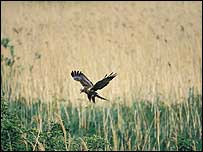 Marsh Harrier Marsh harrier numbers are upOnce on the brink of extinction, Jersey's Marsh harriers seeing a renaissance. The Marsh harrier has suffered a decline in numbers in Europe during the past century. But things are looking up for them here in Jersey - the population is making a recovery. Back in 2007, twenty-two Marsh Harriers were seen over St Ouen’s Pond and there is thought to be four pairs breeding at the moment. The first pair bred in 2002. Wildlife expert Mike Stentiford believes the surge in numbers is down to good management of Jersey’s wetlands. 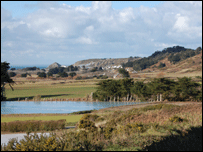 St Ouen's pond Natural born killers?He said: "We have only got 3 primary wetlands: St Ouen’s Pond, Grouville Marsh, and Rue de Pres. The fact that the birds are coming back proves how well the areas are being managed." However, what is good for Marsh harriers is not necessarily good for other birds. Mike said: "Their primary diet is small birds, like Skylarks and Pipits. But this is equivalent of us having a Mars bar – it won’t keep them going for very long." The Marsh harrier supplements these snacks with coots, moorhens and ducks. They even eat pheasants, which is probably not such bad news for some us. They are ruthlessly opportunistic and play a useful role in controlling vermin. Mike said: "On the other side of things they eat rats and moles. A few years ago, I saw one over St Ouen’s Pond trailing something in its talons, which turned out to be a grass snake." Despite this varied diet, Mike says Marsh harriers are not natural born killers and does not believe they pose a threat to other wildlife. He said: "The areas they live in aren’t that big. I think four pairs are about the maximum they can support. Obviously, the more harriers you have got the more competition between breeding pairs." 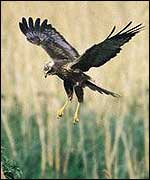 Marsh harrier poised to strike Marsh harriers are amber listed, which means they are still critically endangered. At one stage in the UK, there was just one breeding pair left. The numbers have built up to about 250. Mike said: "They are magnificent birds of prey and we are lucky to have them. Guernsey doesn’t have them." MonitoringMike pays tribute to the Societe Jersiaise, who do the important groundwork involved in monitoring the population. He said: "They sit with their binoculars and count the birds. These are the people who produce the statistics and I say hats off to them. "The best place to see a Marsh Harrier is around St Ouen’s Pond. They are a magnificent sight when they are soaring high above you." Have your sayHave you spotted a Marsh harrier? Are you a fan of these birds of prey, or do you think it will affect the population of smaller birds in the area? last updated: 21/04/2009 at 14:24 Have Your Saypaul Labesse Keith Farman lenni sayers You are in: Jersey > Jersey Wonders > Marsh harrier numbers are up  |
| | About the BBC | Help | Terms of Use | Privacy & Cookies Policy |