| 13 November 2014 |

| |
| BBC Homepage | | |
| |||
| Contact Us | | |
NatureYou are in: Jersey > Nature > The return of the sparrowhawk 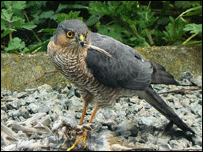 Sparrowhawk photo by:e3000 The return of the sparrowhawkThe sparrowhawk is a fairly common sight in Jersey. However, modern farming techniques nearly killed them off. BBC Jersey found out more. If you visit St Ouen regularly then you will be no doubt be familiar with the sparrowhawk. The dynamic bird of prey is a favourite among twitchers, and is a fairly common sight these days. However, the sparrowhawk disappeared from the island for about twenty years. BBC Jersey spoke to naturalist Pete Double about the bird’s demise, and subsequent comeback. InsecticidesPete Double explains how the use of insecticides contributed to the decline of the sparrowhawk. Pete said: “In the fifties Jersey needed to grow a lot of crops and food to feed the people coming home from the war. “In order to do that, they turned to the use of insecticides, DDT in particular. They put this on the fields to encourage growth. “But they didn’t realise the damage it was doing to the ecology, especially birds. “A greenfinch feeding on the seed, which is covered in DDT, does not encounter problems because he absorbs it into his body over a period of years. “However, when a sparrowhawk eats that greenfinch it absorbs all that DDT in one go.” 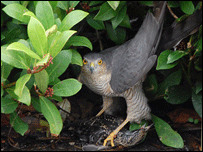 Sparrowhawk photo by: Chester Zoo This results in the bird becoming infertile or its eggs becoming very soft and heavy, according to Pete. “It is these circumstances, which caused the sparrowhawk to disappear completely. When we stopped using dieldrine the birds gradually came back.” Pete said. AmbushTo hunt, the sparrowhawk relies on a combination of stealth and cunning to catch its prey. Pete said: “The bird relies on ambush. They hide behind hedges where they know finches are feeding and suddenly nip over the top and attack. Pete describes how he once inadvertently chased a migrating Wheatear into the talons of a hungry sparrowhawk. Pete said: “I saw a sparrowhawk sitting upright in a field near St Ouen’s pond, while I was talking to a crowd of 25 people. “I decided to try to move the bird so the people could see it fly. “I went off around the side of the field and stumbled across a dell with crowded with wheatears hiding from the sparrowhawk. “They knew the sparrowhawk was there, but they didn’t know I was coming. Suddenly the whole lot lifted up. “One of the wheatears flew towards the crowd of people and that was bird the sparrowhawk decided to hit, right in front of an audience. “I felt terrible. This bird had travelled from Capetown, across the Sahara, up through Europe, was on its way to Greenland and I was indirectly responsible for its demise. “But it was the most wonderfully natural thing and really showed what sparrowhawks are all about.” Have your sayAre you a sparrowhawk enthusiast? Have you seen one recently? If you have any pictures of these feathered chaps, why not send them to us?
last updated: 24/02/2009 at 14:25 Have Your SayNicola King odian@jerseymail.co.uk |
| | About the BBC | Help | Terms of Use | Privacy & Cookies Policy |