 | 28 October 2014 |

| |
| BBC Homepage | | |
| |||
| Contact Us | | |
Nature FeaturesYou are in: Jersey > Nature > Nature Features > Concern over fishing nets 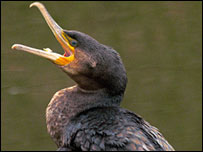 The Societe said cormorants are at risk Concern over fishing netsBy Claire Peters The Societe Jersaise has raised concerns certain fishing nets are dangerous to wildlife, but Jersey fisherman are disputing the claims saying their concerns don't apply to the way local fisherman fish. The lives of seals and birds are under threat after they’re getting caught in a specific type of fishing net, according to the Societe Jersiaise. The Societe is asking for islanders to be aware of how their fish is caught in an effort to protect Jersey’s sea life.
They said the impact of monofilament nets on wildlife is causing them concern and would like people to request line-caught fish. But the society’s claims have been strongly disputed by the association that represents Jersey fishermen. They said the most damaging form of fishing is not practiced anywhere in Jersey waters or the wider Bay of Granville area. Marine reservesMonofilament nets first came into use more than three decades ago and replaced the more traditional nylon nets. The nets are more effective as they are invisible to fish, but this of course means they are also invisible to other types of wildlife. The chairman of Societe Jersiaise’s marine section Nick Jouault told BBC Radio Jersey he would like to see more controls placed on the use of monofilament netting, to protect both fish stocks and the wildlife: “Personally I’d like to see some sort of marine reserves set up. We don’t want to see the fishing industry stopped, it’s a valuable part of our economy, but certain areas need protecting.” 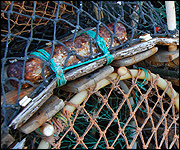 Most fishing in Jersey is for shellfish Exclusion zoneMr Jouault said studies suggest hundreds of thousands of birds are killed around the world each year by mono-nets. He said there was evidence seabirds such as cormorants and guillemots were getting trapped in the monofilament nets in island waters. The Societe is asking for an exclusion zone to be put in place around Greve de Lecq to protect the island’s struggling puffin colony, although there is no evidence any Jersey puffins have died in the nets. No drift-nettingBut the president of the island’s fishing association Mike Taylor said much of Mr Jouault’s information about the nets didn’t apply to Jersey. He explained it’s using mono-nets as drift-nets that does the most damage, and that there was no drift-net fishing anywhere in Channel Island waters. Mr Jouault also claimed grey seals were vulnerable to the nets. He told the BBC at least two seals had been killed in this way and others had been seen with the netting around their necks. “The grey seal colony is an important one not just for the UK…the Brittany colony is one of the most important in Europe and we need to protect and sustain them.” 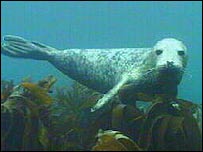 Grey seals live in Channel Island waters Very responsibleMr Taylor told BBC Jersey: “We have a professional fishing fleet which is mostly a shell-fishing fleet, and a small number of fishermen supplement their income in the winter by netting down the beaches. “They’re very responsible, they check the nets every tide and they’ve got no record at all of ever finding any seals in their nets whatsoever.” He explained most nets in Jersey were used on the sea bed as tangle nets to catch crabs. “It’s very very seldom that any birds are found in these nets,” said Mr Taylor. Not in these watersHe added: “It’s true to say drift nets are doing an enormous amount of damage in the north and south Atlantic and I quite agree something should be done about it. “But we do not use these type of nets in these waters.” The States are due to consider changes to fishing regulations in the near future. last updated: 18/04/2008 at 15:16 Have Your SayJamie MacRae Juddie Brittany Livens Jonah Alan SEE ALSOYou are in: Jersey > Nature > Nature Features > Concern over fishing nets    |
| | About the BBC | Help | Terms of Use | Privacy & Cookies Policy |
