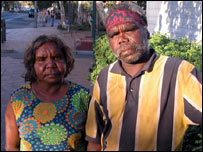
The hospital had not had a full time pharmacist for quite sometime and was in dire need of some reorganisation. A clinical pharmacy service was quickly introduced where one of the main aims was to improve patient compliance with their medications through counselling. This is easier said than done when 85% of the patients are indigenous and English is their third or forth language. My French, learnt at De la Salle College, was not going to be much help here! Recently, an interpreter service has been introduced although prior to this, I got by as best I could with special dispensing labels and a lot of patience. The health issues that ones sees every day can at times be quite confronting. Heart and kidney disease, type two diabetes and pneumonia are extremely common, especially in people in their mid to late twenties, early thirties. Also, the prevalence of sexually transmitted diseases, in particular syphilis, Tuberculosis and crusted scabies are the by far the highest in the country if not the western world per capita. Alarmingly, the average life expectancy for an aboriginal person in Australia is a mere 42 years. As well as the regular admissions due to domestic violence, another alarming trend was the number of infants hospitalised due to failure to thrive. These little fellows are well below the average weight for their age due to poor nutrition as the mothers are not able or do not know how to look after them. | "Alarmingly, the average life expectancy for an aboriginal person in Australia is a mere 42 years." | | Andrew Crowhurst |
Fourteen and fifteen year old girls are often in labour ward and in a lot of cases are either too young to be parents or do not have the domestic support to guide them. Once again, the financial incentives to young mothers is a factor. Alcohol and poor nutrition are two other major factors. Alcoholic related issues bring a huge number of patients in time and time again. In the majority of cases, they seem to lack the will to help themselves and squander the money they are given by the government on cask wine and cards. It would appear that the need to work and provide for oneself has largely been taken away due to the cash payments and royalty amounts paid to them by the “Balanda” or white people. Katherine and Tenant Creek are two of the worst locations in the NT for this impoverished way of life and I am sure do not reflect life for the indigenous living a more traditional way of life out on the communities on their own land. However, it does appear that a large number have opted for this depraved, lazy life style and you do feel that this does create a good deal of tension and animosity with the hard working tax paying local people. Quite a contrast to fifty years ago, when the Indigenous cattle men were highly respected, if grossly underpaid, and regarded as extremely hard workers. Could it be that they are a depressed culture who no longer need to provide for themselves in the way their forefathers did as they now know that money, housing and health care will be given to them on a plate? I suspect that we will not see a solution in my life time, but throwing money at them is not the answer. 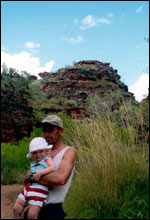 | | Andrew with Emilyn |
In many respects, the job advertisement has proven to be true. Although challenging at times, this job has offered the opportunity to push the pharmacy in a number of different directions and offer a quality service to the hospital. Now that I have been able to recruit some good staff, I have been able to take more time off in the knowledge that the department will be run to a high standard in my absence. The Hospital consists of an extremely busy medical ward; a children’s ward; labour and maternity which delivered in excess of 380 babies in 2003 and a large renal unit. This is supported by an accredited pathology department, Radiology, physiotherapy and Pharmacy. There is never any shortage of staff although the majority of nurses and Doctors just stay for three to six months before moving on. The allied health staff however, are much more settled which is a good reflection on the hospital management which looks after them. In addition to the routine hospital pharmacy duties, we also supply all the vaccines to a number of rural communities. This poses great difficulties in view of the climate and maintenance of the cold chain for these heat sensitive medicines. The other issue is the huge distances. Whilst Beswick and Bulman are a mere hours drive away, Lajamanu on the edge of the Tanami desert takes five hours, as does Yarralin; whilst Borroloola takes eight hours. Furthermore, in the wet season most of these places are cut off for weeks or months and drugs are flown in whilst acutely ill patients are flown out. This is as long as the runway is functioning and not water logged. The third part of Andrew's reflections on life in Katherine can be read by clicking on the link at the right hand side of this page.
|