BULLYING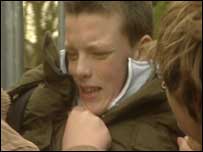 | | Many children are bullied at some point during their school career |
It's a common issue everywhere, with almost all children experiencing it at some point during their school lives - bullying. Inside Out discovers how an innovative, modern-day approach to try to encourage children to come forward and speak out against bullies, has been pioneered right here in the West Midlands. It is estimated that around half of all secondary school children and a quarter of primary school children were bullied last year alone. Around 1,500 children have been counselled by Childline West Midlands about bullying in the last 12 months. The figures are shocking, but what is even more frightening is that for some children, bullying can get so bad they feel there is no way out. Schoolyard scares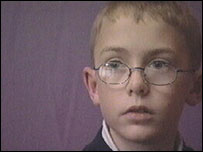 | | Seven-year-old Ross Tonks was badly bullied at school |
Like many children, being bullied at school was a daily occurrence for seven-year-old Ross Tonks. He says, "I was scared and frightened to go to school - I didn't want to go. "He was there all the time - pulling faces, calling me names and hitting me. "I was just thinking, 'what's he going to do to me?'" Ross's mum Rosemary realised her son was being badly bullied after she noticed a dramatic change in his behaviour. She recalls, "Ross was a lovely boy - he was outgoing and he would join in and have a go at anything. "He started to go really quiet and he was coming home with lots of bruises below his knees, but he said they were just from playing football. "We started to realise, 'this can't just be from football,' when he came home with more and more bruises further up his body." 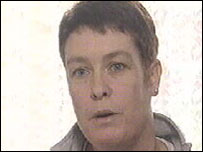 | | I didn't know what to do, I would put my arms around him and love him but it wasn't enough. | | Rosemary Tonks |
After 18 months of continuous bullying, it all got too much for Ross to bear. Ross took drastic action to try and escape the bullying - he tried to kill himself. "I ran into the kitchen and got a knife from the drawer - I did it because I didn't want to be here any more." Fortunately Rosemary intervened before anything happened. She remembers how shocked she was to realise how bad things had become for her son: "While I stood there I saw the seven years of his life actually flash in front of me. Then it hit me - he wants to commit suicide.
"I thought, 'Oh my god, this is how bad the bullying has got, that he doesn't want to live any more.'" Time to take action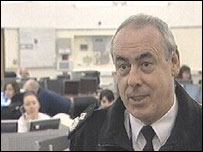 | | Deputy Chief Constable Derek Cake thinks the text messaging service will be a success |
But the West Midlands is fighting back - Warwickshire Police is the first force in the country to use child-friendly technology to tackle the growing problem of bullying in schools. The rising numbers of children who own mobile phones has given bullies another way to intimidate their victims, but now the same device can be used to speak out. With the launch of the first Mobile Phone Text Messaging Service, children can now text in anonymously, if they are being bullied or have become victims of anti-social behaviour. And with the rising numbers of children who own mobile phones, Warwickshire Police are confident that this initiative will prove to be very effective. "The scheme enables young people to use their mobile phones to text a message to a confidential line," Deputy Chief Constable Derek Cake explains. "We can then pass the message on to the appropriate authorities. "It's an additional means for children to contact the authorities without having to walk into an office. "It is nice and simple to do and I would encourage young people to use this service."  | | Young people daren't tell people what is going on for fear of retaliation. | | Adrienne Katz |
Another way of tackling the bullying problem is to make sure children know where to go to get advice or to report an incident. Adrienne Katz from the Anti-Bullying Alliance is just one person who is there to help children who are being bullied. She explains, "It is clear that we have to address a trust factor. "For the police to be effective they have to be told, and they have to have built some trust." Tackling the problemThe government has identified bullying as one of their most important issues, which is why they've recruited Radio 1 DJ Emma B amongst other celebrities to push the anti-bullying message. Emma B says, "The way in which people get bullied is developing as technology develops. 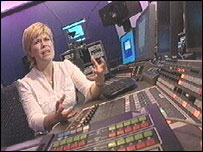 | | Radio 1 DJ Emma B is among a whole host of celebrities backing the government campaign |
"They can be really insipid, some of the things that they do - like kids videoing people being beaten up on their mobile phones and then texting it around to their friends." Footballer Rio Ferdinand and singer Natasha Bedingfield are just some of the big names lending their image to a new campaign which aims to hit the anti-bullying message home to kids. But despite the government's best efforts, bullying is still going on, and it seems the key to tackling the problem is to find out why. An anonymous bully told Inside Out that she became a bully to get power. She explains: "I was getting into fights because someone had said something and it had got back to me. | Bullying - The Facts | Bullying is defined as deliberately hurtful behaviour, such as name-calling or even physical harassment. Almost half of all secondary school children and one in four primary school children admit to having been the victim of bullying. More than 20,000 children and young people called ChildLine about bullying last year. Almost three out of four children who called ChildLine were being bullied by a group rather than a single person. More positive figures show that four out of five children will eventually ask for help. Source: ChildLine Online |
"My mates'd say, 'just give her a whack, y'know.' "When I was fighting I was angry but I didn't feel anything," she says. "Afterwards all my friends would come up and praise me for it and I felt good, I'd walk away with a smile on my face." Fortunately this bully has now realised the consequences of her actions. "I feel really guilty now, I wish I hadn't done it. "If I could turn back time now and go back to school I wouldn't have done half the things I did, I wouldn't have been a bully." Moving forwardRoss has had to move schools to escape the bullies. And, for Ross and his family, their experiences will stay with them for a very long time, as his mum explains: "We still live with it day after day - it is still there, it still sits in his mind. "It's a long way from over for us." | Sources of help and support | ChildLine
Freephone: 0800 1111
24-hour confidential advice line staffed by trained counsellors The Samaritans
08457 90 90 90
Call the Samaritans if you need to talk to someone in confidence. They are available 24 hours a day. BBC Bullying Support
|
But police in the West Midlands are looking to the future, when they hope their measures to encourage children to come forward in confidence will help keep the problem under control. "When you look towards the future we want to provide everything possible for young people to tell us what is going on in their own society," says Deputy Chief Constable Derek Cake. Experts hope that the problem can be reduced even if it cannot be stamped out completely, as Adrienne Katz explains: "We can never totally eradicate bullying but I would love to see the level of victimisation heavily reduced." And as a former victim of bullying, even Ross has an important message for anyone who is bullying someone else: "Why do you keep on hurting other people, why don't you just stop doing it?"
If you have been affected by any issues in this article and need further information, support or advice, you can contact in confidence; The Samaritans on 08457 90 90 90 or ChildLine on 0800 1111. | 



 Inside Out - West Midlands: Monday February 28, 2005