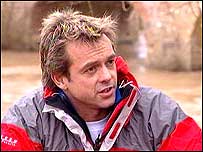
Web exclusive interview | 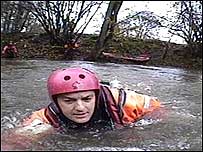 | "Our role has expanded out of all recognition over the last few years." Paul Hayden, Chief Fire Officer |
Behind the scenes... We asked Paul Hayden, Hereford and Worcester's Fire Chief, to tell us more about the work of his flood fighters in this Q & A interview. Q. How easy or hard it has been for fire fighters to adjust to learning new skills to deal with flood fighting? A. Fire fighters have always been involved with environmental disasters such as floods, using the fire engines we have to fight fires to pump flood water away. Also we've always been involved in assisting as best we can in any rescues, even though we did not have any specialist equipment or training for water emergencies. However, our role has expanded out of all recognition over the last few years as we have made the change from being a simple "Fire Brigade", to a true "Fire and Rescue Service" that is trained and equipped to respond to a wide range of disasters that now threaten our communities.
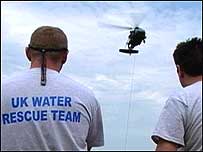
Our specialist water rescue teams have undergone very extensive training to ensure that they can operate safely and save lives in the most extreme conditions. The work is very physical, but also involves a lot of technical knowledge on subjects as diverse as hydrology, so that fire fighters can "read" the water conditions to judge whether there are hidden dangers, or physics to understand the impact of moving water on vehicles and structures during a flood.
Q. What type of situations have come up since they filmed the original TV feature?
A. 2006 saw a record number of flash floods in the Midlands and we are seeing an ever increasing number of people requiring rescue from inland water ways, both due to flooding and due to increased leisure use of our rivers and canals. A particular concern is the growing number of people who become trapped in their vehicles trying to drive through floodwater, a phenomenon we know from research causes the majority of flood deaths in the USA.
Q. Tell us about the new kit and equipment needed by the force to tackle flood fighting...
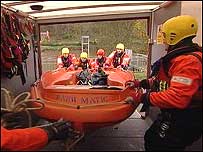
A. Our High Volume Water Pumps have made a real difference to our ability to move large volumes of water across considerable distances. 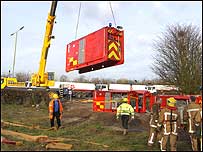 | | New rescue equipment and pumps are now a feature |
We can use these to protect vital infrastructure, such as hospitals or electrical sub stations or provide water for fire fighting. They have already proven themselves during the Carlisle floods and last year's Bunsfield Oil Refinery fire. Some of the other rescue equipment used in inland water events differs considerably from that used for water rescue at sea. For example, our boat design has to consider the significant risk of damaging hulls on submerged obstructions such as street signs in the urban environment or barbed wire fences in rural areas.
Q. Are there any comparisons with the USA situation and what have you leaned from experiences overseas?
A. I have just completed a 14 month national research project on behalf of the UK Chief Fire Officers' Association (CFOA) looking at the way we can respond to environmental disasters in the future.
A key part of that research has been to examine the way the USA responds to the floods bought about by hurricanes. 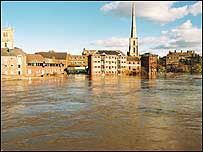 | | Face of the future - flooding in our towns and cities? |
We quickly identified that some states, such as North Carolina, had learnt some vital lessons from past tragedies and developed world class response and recovery arrangements. Unfortunately, during the project Hurricane Katrina demonstrated that these lessons had not been acted upon across the whole of the USA.
We are not prepared to wait for our own "Katrina" to happen in the UK before we act. North Carolina's flood response programme was probably 10 years ahead of the UK when we commenced our project, but, we are now catching up fast and offering them a number of new ideas. By sharing our experiences, communities both sides of the Atlantic will be safer from whatever the environment throws at us in the future. | 



 Inside Out - West Midlands: Friday February 2, 2007