 | Cathy Come Home - still powerful 40 years on |
Cathy Come Home On the 40th anniversary of the first broadcast of Cathy Come Home, Inside Out looks at the television play's connections with the West Midlands. The TV drama has become known as one of the most influential programmes in history. Forty years on, we ask whether anything has really changed for homeless people. We also speak to the award winning film director Ken Loach who made the drama. And we visit St Basil's, a Birmingham based organisation which works with young people to prevent homelessness - and we find out what the teenage residents make of Cathy Come Home. Web exclusive - read the St Basil's teenagers' diaries Groundbreaking dramaCathy Come Home is one of the most influential pieces of television ever made.
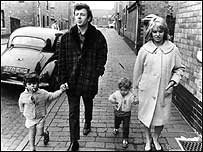
First broadcast on 16th November 1966, 12 million people watched its transmission which led to a fierce debate about homelessness in Britain. 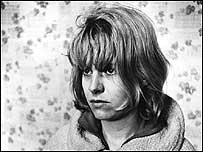 | | Raw and harrowing - Cathy's story resulted in heated debate |
The play was brought to our screens by Ken Loach, a director from Nuneaton, and Birmingham-born producer, Tony Garnett.
Jeremy Sandford, a writer from Herefordshire, came up with the script which focuses on one young couple, struggling to stay together after a series of misfortunes. Cathy Come Home did as much to raise awareness of the problem of homelessness in the UK as it did to revolutionise TV drama making.
The programme was so powerful it sent shockwaves through British society, and resulted in changes in the laws on how homeless people were treated. Real life dramaIn the mid 1960s there was large scale slum clearance - councils were knocking down old houses, but they weren't able to replace them quickly enough. Cathy Come Home features some of Birmingham's most poverty stricken communities, and some scenes were shot in real houses on the city's streets. The film featured real people as extras, and included the voices of people telling their own stories.
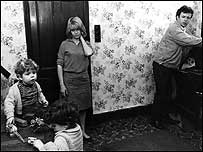 | | Touching a nerve - Cathy's story created a political storm |
The impact of Cathy Come Home was immediate. The harrowing final scenes, as Cathy's children are taken into care, caused an outrage.
Within days of the broadcast, Ken Loach and Jeremy Sandford had been summoned to a meeting of Birmingham Council's Housing Committee. Council leaders were furious about how the city had been represented. The shockwaves reached well beyond the boundaries of Birmingham. Across the country, councils were examining their housing policy, and rules on accommodating families were being rewritten. The homeless charity Shelter was established in a wave of anger at the way people had been treated. Making Cathy Come Home Inside Out meets Ken Loach, the film's director, to talk about the impact of the play. He says that the film did set out to upset some people: "Families were being split up because they had nowhere to live, fathers were prevented from living with their children, and children were being taken into care... "That was a situation that should have made people angry." Ken Loach | 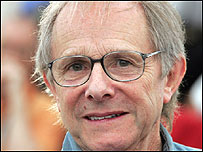 | "We felt that some people needed to be upset... That was a situation that should have made people angry..." | Director Ken Loach talking about Cathy Come Home |
We also take producer Tony Garnett back to Hingeston Street in Birmingham, where crucial scenes were filmed.
He recalls the shooting of the drama: "The people of Birmingham were just marvellous, the way they just didnt hinder our filming - they were very supportive all the way through.... "Weve always said that the people we are making the film about are the experts, not us, so the whole crew would consult local people here, and if they said it wouldnt be like that, then wed listen and change things."
Actor Ray Brooks (now in Eastenders) describes how playing Cathy's husband Reg influenced his career and his approach to acting: "Its an astonishing piece of work, I think, and it makes me feel very proud. Being involved with something like that is quite astonishing. "It was sad, the more I think about that programme it opened my eyes, it frightened me."
Forty years on Cathy Come Home made its impact 40 years ago so how has the housing situation changed over the last four decades? Shelter says that the slums may have gone but the housing crisis is still with us. More than half a million families are living in overcrowded conditions and record numbers of families are in homeless accommodation. In Birmingham and other towns and cities there's still a lack of affordable housing, so places like St Basil's have been set up to try to bridge the gap. Every year they work with thousands of young people across the West Midlands to help prevent homelessness.
Inside Out took a group of teenagers from St Basil's to meet the director, Ken Loach, who took time out from work on his latest film to talk to them about their impressions of the play. The young people are surprised by how bad conditions were in the 1960s. But Ken reminds them not to be complacent: "You shouldn't be complacent about thinking that everything's OK now because there's different problems. "There's lots of new problems, big problems for your generation to explore." St Basil's resident Charlotte Falconer says: "I think the change that came about because of Cathy Come Home, was that the government was listening and the government was aware of peoples situations - and that it wasnt their fault that they were in that situation, and thats why theres hostels and places for homeless people to go, and I definitely think that that film was the beginning of something."
St Basil's works with young people to help prevent homelessness, and as part of their skills training the young people have made a film of their own in conjunction with First Light Movies. Watch it exclusively on the Inside Out website. Read the St Basil's teenagers' web diaries Lasting impact?The young people ask Ken Loach whether he thinks Cathy Come Home really made a difference to the affordable housing shortage: "A film isnt a movement, its just a film. Theres an old saying agitate, educate, organise. "A film can agitate a little, illustrate, but its part of the process. Unless you organise, nothing much will happen - people turn off the telly or walk out of the cinema and thats it. "So its got to project forward, but it can change things. Our aims were modest. "We were saying 'this happens and it shouldnt'. "It achieved something, in that there was a change in the law that fathers wouldnt be refused accommodation with their families, but that was quite a small victory."
Forty years on, one of the world's best known directors is still concerned about the lack of homes available to people on low incomes. But he remains unconvinced about the lasting effect of the outrage created when Cathy Come Home was broadcast. Links relating to this story:The BBC is not responsible for the content of external websites | 



 Inside Out - West Midlands: Monday October 23, 2006
 REALPLAYER REQUIRED