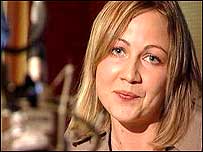
 | Poles apart - Dorota Bawolek talks to old and new immigrants |
Older PolesIn the Midlands somewhere between 40,000 and 70,000 Eastern Europeans have come to live and work over the last couple of years. Like everywhere else in Britain, the vast majority are Polish. But then for many cities in the Midlands there's nothing new about Polish immigration. We asked one of the Midlands newest residents, Dorota Bawolek, to find out about the Poles who've already made cities like Coventry their home. Old meets new From humble beginnings, Polish people have made good lives for themselves since they first settled in Britain after the war. But most, like Jan Jankowski, were too frightened to return home after the war.
"I didn't like the Russians, and they didn't like us," he recalls. "So if I went back, I went back to jail, back to Siberia
who knows some were shot as well."
Hundreds of thousands of people like Jan were forced out of Poland during the war.
Many Poles joined the British forces - hoping to help liberate their country. But when the war ended, with Poland under Russian occupation, most decided to stay in Britain. Wartime resettlement Over 100,000 Poles settled in Britain after the Second World War. Most went to live in former army bases and prison camps. Jan Jankowski was sent to one near Leominster in the West Midlands. 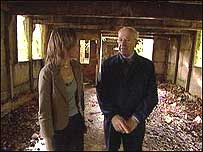 | | Going back - Dorota and Jan return to the resettlement camp |
Dorota and Jan returned to the resettlement camp for the first time in decades.
"It's 60 years since I have been here and I never thought I would be alive to see it again," says Jan poignantly.
Once he got his life sorted out, Jan enjoyed his new life in England:
"I found life fairly easy, altogether, we have no trouble."
Insults and immigrants
But not everyone found life in England so easy. Polish Fact File | In the 1931 Census there were 44,462 people claiming Poland as their birthplace. Those who arrived during the Second World War and stayed on, constitute the core of the present-day Polish community. 1947: Polish people homeless because of the War were invited to come to UK. In 1951 there were 162,339 Polish-born people in Britain. By 1971 the figure had dropped to 110,925. |
In the years after the war Polish workers suffered insults and even physical attacks from their fellow workers, as Jan Jankowski explains: "It was not widespread, but there was enough to put the thought in our head, 'are we welcome'? "And after we had fought side by side, and I think that really hurt."
Sixty years after they first arrived, these older Poles have now lived most of theirs lives in Britain. During this time they set up their own clubs, schools and even a radio station. Poles Apart was set up 15 years ago for the thousands of Polish people who already lived in Coventry - its programmes are broadcast in Polish. But the Polish clubs the old migrants set up are now welcoming a new generation of immigrants. New generation Jan Jankowski is enthusiastic about the new Poles coming to live in the Midlands.
"I think it is fantastic. You have revitalised our old community, you have filled our churches, you can get Polish goods in supermarkets
where before you had to look for them."
But he believes that it was harder to settle in the UK in his day:
"It is easy for you, because in my day, when I came here, Coventry was bombed. "You come here and there are plenty of houses, admittedly they are expensive, but they got a roof over their head." Despite some early hardships, Jan is remarkably upbeat and positive: "Actually I enjoyed life. This is the country that gave me everything what I have."
The big web debate
Read your comments in English and Polish... Part one - comments
Part two - your comments
Part three - your comments Hear Poles talking about life in Hereford Links relating to this story:The BBC is not responsible for the content of external websites | 



 Inside Out - West Midlands: Monday November 13, 2006