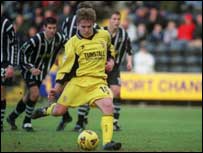
CLUBS IN CRISISCoventry and Port Vale could be on the brink of financial ruin. The collapse of ITV Digital has left them teetering on the edge of disaster. They've been left unpicking a financial nightmare of immense proportions. The clubs now face perhaps the greatest challenge in their long histories - to find a solution to their off-the-pitch woes. Coventry City is already £30 million in debt and has just lost another £5 million. Port Vale is also struggling to keep a healthy bank balance, having lost £400,000 in the digital collapse. The price of successFootball is big business. The Nationwide Football League's deal with ITV Digital promised a brighter future for lower division clubs when it was struck in 1998. Four years later, the fall-out from the collapse of ITV Digital is devastating with clubs' incomes falling dramatically. 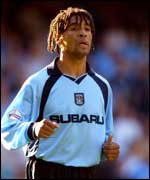 | | Coventry's Richard Shaw is one of the players to take a pay cut |
It's been estimated that the ITV Digital collapse has cost the clubs relegated from last season's Premier League £4-£5 million. The spiralling cost of footballers' wage bills has been blamed for pushing many clubs to the brink of financial ruin. Last week Coventry City asked their players to take a 12.5% wage cut. A major problem for relegated teams like Coventry is that they bring with them a Premiership wage structure. Many experts also believe that the player wage increases experienced through the Football League, particularly in the Nationwide League, have resulted in wages that are unsustainable. Coventry's total wage bill in 2001/02 was over £19 million. It's not surprising that they're now feeling the pinch. Survival of the fittestSo what's the solution for our Division One and Two clubs if they're to survive? The way forward for many clubs is attracting young talent and disposing of high earners.  | | Supporters are worried that some clubs will go to the wall |
Port Vale Chairman Bill Bell says, "It just gets harder every year. I've had to cut my players' wages bill by 30%." The club has also reduced the size of its squad to make the books balance. The Valiants have already released Northern Ireland international Jon McCarthy to trim the club's wage bill this season. Port Vale's manager Brian Horton told the club's web site, "Finances play a big part in football now." "It's a situation as managers where you can't win because you don't want to sell you better players". "But at the end of the day, the club has to survive financially and we are finding it difficult at the moment, for various reasons." Victims of recessionHigh wage packets could be a thing of the past for players in the Nationwide League and lower divisions. 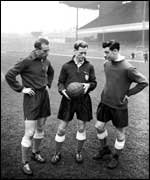 | | Johnny Haynes started the boom in players' salaries |
But at least it isn't as bad as it was in the early days of the Football League. During the late 1950s the maximum wage for a footballer was a paltry £20 a week. In 1961 the Players' Union won its battle to abolish the maximum wage, and players were free to negotiate their terms. Johnny Haynes of Fulham was immediately paid £100 a week - a forerunner of today's high salaries. On the ballSo what chance do our Nationwide League and Second Division teams have of surviving in the current climate? 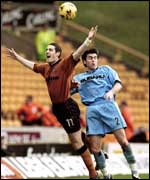 | | Mark Edworthy in happier playing days |
Some football experts suggest a redistribution of football's wealth. Others point to the need for better financial management by the clubs themselves. They also suggest that clubs could form new partnerships, and even set up supporters' trusts. One thing is certain - players will have to increasingly justify their salaries. Former Premiership and Coventry player Mark Edworthy is one of the victims of the football recession. He had to play unpaid for three months just to secure a contract. Last week he accepted a new contract from promotion hopefuls Wolverhampton Wanderers. Whatever the outcome of the ITV Digital dispute, footballers like Edworthy face an uncertain future. Unless football can sort out its finances, it's possible that our national game will not be able to support the number of clubs it does at present. | 



 Inside Out - West Midlands: Monday 21st October, 2002