BBC HomeExplore the BBC
This page has been archived and is no longer updated. Find out more about page archiving.

24 September 2014
Inside Out: Surprising Stories, Familiar Places

BBC Homepage
England
Inside Out
East
East Midlands
London
North East
North West
South
South East
South West
West
West Midlands
Yorks & Lincs
Go to BBC1 programmes page (image: BBC1 logo)

Contact Us

Inside Out - West: Monday January 9, 2006
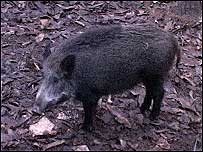
Wild Boar are back

Boar
The boars are back but not everyone is delighted

They're hideous, they're hairy and they're here.

After an absence of 300 years wild boar are back in the English countryside, and one of their new strongholds is the Forest of Dean in Gloucestershire.

But should we let them stay?

The new series of 'Inside Out West' on BBC ONE features one of the UK's hottest conservation debates.

THE BOAR NECESSITIES


An adult boar can weigh up to 200kg.

They can run faster than Linford Christie.

They can be up to one metre in height.

After two years of age the male boar grows tusks.

Wild boar are omnivorous, eating plant and animal matter.

They have poor eyesight but a keen sense of smell and exceptional hearing.

In captivity boar can live for 25 years.

The problem is that for many people the wild boar are a menace.

Farmers particularly are worried about the possibility they could spread disease.

Forest of Dean farmer Richard Vaughan keeps a herd of rare breed pigs and is not a fan of wild boar:

"Disease is a major concern. We don't have classic swine fever in this country.

"Thank goodness we don't. It would be a ghastly problem.

"It would make the foot and mouth thing seem fairly small in comparison and there are heaps of other diseases that pigs can have.

"The current population of wild boar should be exterminated. Then the government should stop and consider how it goes forward. It's easy enough to introduce them. It's very hard to get rid of a population you don't want."

There have also been incidents where wild boar have attacked and injured people who disturbed them.

And it's not uncommon for farm land to be churned up as the wild boar dig for food.

Others though say the wild boar should be protected as a formally native species.

The government is about to make a decision about what to do after a big consultation exercise with the public.

One option is to eradicate the wild boar population entirely but this would be costly and difficult.

Another option is to do nothing and allow the population to re-establish itself.

Or there may be a middle ground, introducing some form of management of the herd.

Inside Out West goes on the trail of the wild boar, using a specially erected hide in a clearing.

And after two days of silently waiting, their efforts are rewarded as they spot eight wild boar foraging for food on the forest floor.

Links relating to this story:

The BBC is not responsible for the content of external websites

Inside Out Archive

Inside Out: West
View our story archive to see articles from previous series.

BBC Where I Live

Find local news, entertainment, debate and more ...

Bristol
Gloucestershire
Somerset
Wiltshire

Meet your
Inside Out
presenter
Josephine d'Arby

Josie d'Arby
your local Inside Out presenter.

Contact us
Contact the West team with the issues that affect you.

Free email updates

Keep in touch and receive your free and informative Inside Out updates.
Subscribe
Unsubscribe

The West's most hated four letter word?

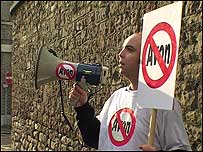
Adam Thomas protesting
Avon - a four letter word in the West Country

Ten years ago, the county of Avon was abolished after years of grumbling and discontent.

But, for the campaigners who'd fought long and hard to get rid of the county, it was a hollow victory.

A decade later, the name Avon lives on in many of our institutions and businesses.

Somerset Sound broadcaster Adam Thomas finds it immensely irritating and is waging a one man war on what he claims is the West's most hated four letter word.

He says he's received more letters about this issue than anything else.

Folk singer Fred Wedlock has even written a protest song about it.

So why do we still have the Avon Wildlife Trust, the Avon & Somerset Police, Avon Fire and Rescue, and dozens of other organisations?

Adam is mystified. The answer is probably that Avon is a simpler way to describe the area represented by the councils of South Gloucestershire, Bristol, Bath and North East Somerset and North Somerset.

But what upsets Adam more than anything else is to find the word Avon still used as part of your address.

He blames the Royal Mail, but they tell him it's not their fault and they definitely don't require people to use Avon.

Links relating to this story:

The BBC is not responsible for the content of external websites

Mods and rockers

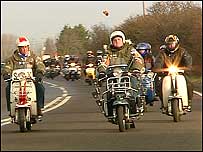
Steve Treble riding with scooters
Rocker turned Mod - Steve Treble swaps to a scooter

Believe it or not, the mods are not only still with us – but they’re more fanatical about their scooters than ever.

For some reason they still adore their parkas, the music and most of all their bizarrely ornate scooters.

To find out what makes the mods tick – Inside Out West finds a most unlikely new recruit - Bristol rocker Steve Treble, who runs a guitar shop in Bristol.

If they can make a mod out of Steve Treble, they can make a mod out of anyone.

He must leave behind his high speed, high octane rocker's lifestyle, and prepare to be “modified”.

Steve normally rides a powerful Ducati motorbike, but now he's asked to swop his mean machine for a little Lambretta.

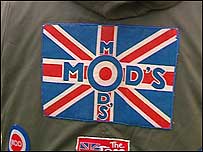
Mods logos
My generation - classic mods memorabilia

The handling and the controls are totally different from his high speed bike.

The biggest scootering events are usually held in the summer.

But for some reason, the keenest of the West Country mods polish every inch of their chrome headlights and mirrors for a winter ride out just after Christmas.

Steve's verdict after joining them on their big day out? It was fun - but he won't be making the switch a permanent part of his life.

Links relating to this story:

The BBC is not responsible for the content of external websites


About the BBC | Help | Terms of Use | Privacy & Cookies Policy