BBC HomeExplore the BBC
This page has been archived and is no longer updated. Find out more about page archiving.

24 September 2014
Inside Out: Surprising Stories, Familiar Places

BBC Homepage
England
Inside Out
East
East Midlands
London
North East
North West
South
South East
South West
West
West Midlands
Yorks & Lincs
Go to BBC1 programmes page (image: BBC1 logo)

Contact Us

Inside Out - West: Monday November 6, 2006
Watch the show again
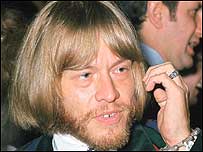
Brian Jones
Rolling Stone - Brian Jones was one of the '60s rock casualties
REALPLAYER REQUIRED

Rock 'n roll mystery

Brian Jones was described at his funeral in Cheltenham as having "little patience with authority, convention and tradition".

But there’s no doubt Jones was the driving force behind the early success of the Rolling Stones.

He met his death at the bottom of his swimming pool in the summer of 1969.

New evidence

The official version of events was that he took a midnight swim and drowned because of a cocktail of drink and drugs in his system.

Brian Jones Fact File

Born Lewis Brian Hopkins Jones 1942 in Cheltenham.

Attended Cheltenham Grammar School. As a teenager he played washboard in a school skiffle band. Jones later played saxophone with a local jazz group.

Jones was one of the founding members of The Rolling Stones in 1962. The band were originally The Rollin' Stones.

The Stones first hits were covers including 'Come On' (1963), 'I Wanna Be Your Man' (1963), 'Not Fade Away' (1964), 'It's All Over Now' (1964) and 'Little Red Rooster' (1964). Jones parted company with The Stones in 1969.

In 1968 Brian bought a country retreat, Cotchford Farm, in Hartfield, East Sussex - it was the former home of Winnie The Pooh author A A Milne.

Drowned 1969 aged 27 at Cotchford Farm. A verdict of death by misadventure was recorded by the coroner. Speculation surrounding Jones' death continues.

A bronze bust of Jones can be found in the Beechwood Shopping Centre in Cheltenham.

But Inside Out West reveals new evidence that casts doubt on the official coroner’s verdict of death by misadventure.

We've obtained a medical report which appears to show Brian Jones was relatively sober on the night he died.

It shows he'd consumed the equivalent of three and a half pints of beer - not much for a seasoned drinker.

And doctor's notes suggest that the drugs found in his urine may have been caused by a catalogue of prescription medicines he was taking at the time of his death.

The new evidence adds some credence to the theory that Jones's death may not have been accidental.

Now the Chairman of the Brian Jones fan club is planning to write to the Attorney General with a dossier of new information on the case.

He will ask for the inquest to be re-opened and Jones' body to be exhumed so the death can be re-examined.

Links relating to this story:

The BBC is not responsible for the content of external websites

Inside Out Archive

Inside Out: West
View our story archive to see articles from previous series.

BBC Where I Live

Find local news, entertainment, debate and more ...

Bristol
Gloucestershire
Somerset
Wiltshire

Meet your
Inside Out
presenter
Josephine d'Arby

Josie d'Arby
your local Inside Out presenter.

Contact us
Contact the West team with the issues that affect you.

Free email updates

Keep in touch and receive your free and informative Inside Out updates.
Subscribe
Unsubscribe

The big bang

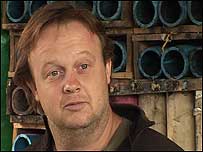
Charlie Adcock
Explosive behaviour - Charlie Adcock

Charlie Adcock is a man who likes to blow things up - and the bigger the challenge the better.

Charlie makes a living from setting off explosions - sometimes for the movies and sometimes to get rid of buildings that are no longer needed.

Now though, he's grappling with one of the biggest challenges of his career.

He wants to create his biggest ever fireball - and he's doing it alongside the runway at RNAS Yeovilton in Somerset.

Inside Out West follows him as he gets ready to ignite the the big bang.

Cunard's Commodore

Commodore Ron Warwick
Master and commander of the high seas - Ron Warwick, OBE

Inside Out follows a special voyage on the Queen Mary 2 which marks the end of an era for a remarkable man - Commodore Ron Warwick.

Commodore Warwick, from Somerset, went to sea at 17, and has spent the last 36 years with the Cunard line.

But it's time for him to retire and this will be his final voyage in charge.

We join him and more than 2,000 passengers on board the liner for his final six day voyage back to the UK.

Queen of the seas

Cunard is clearly in Commodore Warwick's blood.

The company's ships have been sailing between Liverpool and America since 1840, and Ron's father Bil was Master of the original Queen Mary.

"New York's always been my favourite port... I admire the landscape and the scenery. We've just passed under the bridge for the last time as Commander of the ship and there's a certain sadness in that..."
Commodore Warwick

Commodore Warwick nearly missed out on the chance to captain the ship.

He was due to retire in the late 1990s when Cunard announced they were to build their first passenger liner for 30 years.

However, the company asked him if he would delay his retirement to take command of the vessel.

"It took me half a second to say yes," says Ron proudly.

Queen Mary 2

The Queen Mary 2 became the biggest - and most expensive - ocean liner in the world.
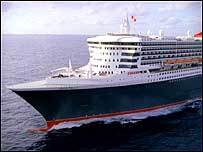
Queen Mary 2
Queen of the seas - the Commodore's final voyage

It's a tough job being in command of this floating resort which boasts 1,600 cabins, a beauty spa, five swimming pools, a planetarium, theatre and even an on board brewery.

But Commodore Warwick is a commanding presence - and he's also viewed as something of a celebrity by his passengers.

But after a lifetime at sea, it's now time for Commodore Warwick to head for dry land and retirement at his home near Frome.

For him it's the end of an amazing era.

Links relating to this story:

The BBC is not responsible for the content of external websites


About the BBC | Help | Terms of Use | Privacy & Cookies Policy