Tavistock Canal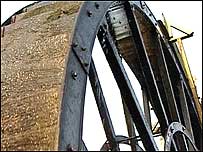 | | Man made wonder - the Tavistock Canal and its industrial legacy |
Inside Out looks at the remarkable story of the Tavistock canal, and reveals how it played a major role in the South West's thriving economy during the 19th Century. Engineering innovations The Wheal Friendship Mine near Tavistock is ideal for a quiet Sunday afternoon stroll. But it's not quite what it seems. Delve a little deeper and it tells the story of a remarkable man who, two centuries ago, overcame seemingly impossible obstacles to create a lasting legacy. In 1800 Morwellham on the Tamar was one of the most important inland ports in Britain and the surrounding area, with its rich mineral deposits, was a magnet for ambitious scientists and engineers.
But all that changed when John Taylor arrived to manage the mine in 1798, at the tender age of 19. He set about making use of Dartmoor's most abundant resource - water. In the process he kick started an incredible series of engineering innovations. Challenges Taylor had improved the mine's productivity but he wanted to tackle the problem of the awful journey to the Tamar. The Tavistock Canal takes its water from Abbey Weir and then emerges at Tavistock Wharf, where ores and other goods are brought down ready for loading onto horse drawn iron barges. 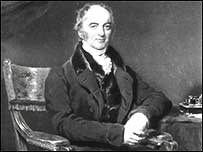 | | John Taylor - innovator and engineer |
The canal is less will than five miles long but sets Taylor some daunting challenges along its short route. First he has to get it over the Lumburn valley, so - he built an aquaduct. Then, two and a half miles out of Tavistock an even bigger obstacle blocked his way, rising 500 feet above the proposed level of the canal - Morwell Down. Then he discovered copper and opened up Wheal Crebor mine in true pioneering fashion. The wheel got its water from the canal, yet more evidence of Taylor's ingenuity. Thriving industry The canal carried almost a million tons between the Tavy and the Tamar over the next 30 years. Tavistock became a thriving industrial town, and Taylor's canal contributed to a prosperity that saw it rebuilt in the middle of the nineteenth century. 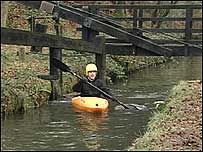 | | The Tavistock Canal today - a leisure playground |
But in 1859 the latest advance in transport technology arrived - railways.
Despite this the canal lived on as a supplier of water power. It remained a prime energy source for mines such as Bedford United well into the 20th Century. And then, work started on a project that ensured the canal lives on into the current century. Morwellham Power Station was threatened with closure in the 1980s but, thanks to cost cutting and global warming, its future is now secure. The canal is also an important recreational resource today. Later life After leaving his mark on the Tavistock area, John Taylor went on to greater things on the world stage - his achievements earned him a Fellowship of the Royal Society. His name survives today as one half of the construction giant Taylor-Woodrow, who built the spectacular Welsh Assembly building. But in the South West he'll be remembered for a modest little canal that's already been in productive use for two centuries, and is still very much part of a greener future. Links relating to this story:The BBC is not responsible for the content of external websites | 



 Inside Out - South West: Monday February 6, 2006