NEWQUAY RIOTS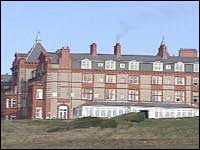 | | HEADLAND HOTEL | the scene of the Newquay riots over 100 years ago |
With its world famous beaches and ideal surfing conditions, Newquay in Cornwall is a mecca for tourists, but it hasn’t always been this way. Inside Out journeys back over 130 years to discover how Newquay transformed itself into a holiday hotspot despite the opposition that stood in its way. In the 1870s, Newquay was a rough and ready village, reliant on farming and fishing. The age of the railway opened up coastal towns of the South West to holidaying middle classes, with time and money to take in the sea air. 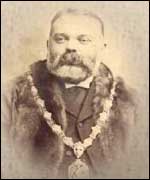 | | Silvanus Trevail was a man with a plan |
One man had a vision to make Cornwall the rival of the south coast resorts. The plan began at Newquay and the man was Silvanus Trevail. Grand plansIn 1890, Trevail, once Mayor of Truro, formed the Cornish Hotels Company. His aim was to create a chain of first class hotels, whose guests could move between them at a whim. As with so many grand schemes, lack of money hampered Trevail’s plans and he was forced to settle with just one hotel, the Atlantic. Trevail was an ambitious man however, and set his sights on the headlands of Newquay. His vision was to turn them into an upmarket estate, the pinnacle being a luxury hotel called the Headland. The scheme was not without enemies and the discontent of Newquay locals finally erupted into the now infamous Newquay riots. Opposition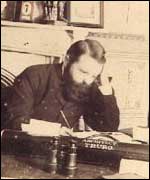 | | Trevail was an architect, developer and a pioneer of tourism in Cornwall |
The proposed site of the hotel had previously been used as land on which farmers grazed livestock and local fishermen dried their nets. It is little wonder that their hackles rose at Trevail’s proposals threatened to ruin their livelihoods. "Don’t forget the time we are talking about, all the wealth of Newquay came through the quay behind me," explains Peter Hicks. Despite local opposition, work on the Headland Hotel began in August 1897. Outraged farmers and fishermen rushed to the site, where they tore down the wooden works office. Valuable tools and planks of wood were hurled off the cliff. Angry mob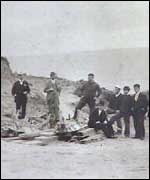 | | Wooden planks and workman's tools were thrown off the headland |
When Trevail returned to the site the following day, the mob were waiting. Missiles, including eggs and apples were hurled at him, before he was pinned to the railing and subjected as the press reported, to a "very fierce outpouring of contempt and insolent abuse." Although hundreds took part in the demonstration, only 22 men were charged. The men were fined £2 each, a large sum in those days, for committing malicious damage to goods. Construction continued, although unemployed miners from Redruth had to be employed as local workers were reluctant to return. Today the Headland is as grand a hotel as Trevail could have wished, although it got off to a shaky start. Tragic endTrevail was a man ahead of his time, a campaigner for sanitation improvements and an entrepreneur. His success however, did not bring him happiness. Trevail suffered from depression and had been unwell for some time. In November 1903 he shot himself in the lavatory of a train. This strange and tragic end will always haunt the memory of Silvanus Trevail - a man who admirers say, should be remembered as a pioneer. "We can think of him as an inspiration, a man who in a time of great misery was active in doing good for Cornwall," says Dr Perry. "He was a driven man and he drove himself to self-destruction." | 



 Inside Out - South West: Monday 20th January, 2003