Stanley Gibbons | 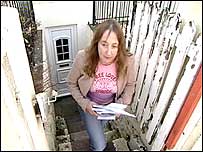 | "They all died... very young and in some mysterious circumstances."
David Randall | Stanley Gibbons - godfather of philately and man of mystery |
Stanley Gibbons The name Stanley Gibbons is synonymous with stamps and philately. Gibbons founded a global stamp empire from a chemist shop in Plymouth, but could he also have been a man who, literally, got away with murder?
David Stafford dons his deerstalker to uncover the strange case of the many wives of a Victorian man of mystery.
Man of mysteryThe Stanley Gibbons Group is an enterprise that's grown from its humble origins to become the world's leading stamp business, with prestige London showrooms and sales of over £13 million a year. But the story of the company's founder has altogether darker undertones. Stanley Gibbons, the godfather of stamp collecting, that most innocent of pastimes, married a succession of young wives. But the early deaths of these women raises the possibility of Gibbons being a serial wife killer. 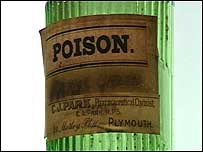 | | A head for business - Stanley Gibbons started in pharmacy |
Edward Stanley Gibbons was born in Plymouth in a house on the site of what is now, appropriately enough, the city's main Post Office in 1840. His birth date coincided with the very same year that the world's first postage stamp, the Penny Black, was issued. After leaving school young Stanley joined the family business, a chemists, learning to mix and dispense medicines and potions from his father's shop. But Stanley had already caught the stamp collecting bug - and realised there was money to be made buying and selling them. By the age of 16 he was laying the foundations for what was to become the world's biggest philately business - trading stamps from a little desk in the corner of the chemist shop.
And he proved to be a sharp operator. When his father died in 1867, Stanley took over the pharmacy. But selling stamps was proving more profitable than dispensing medicines so he sold the pharmacy and moved to new premises in Lockyer Street which became a stamp outlet. It was there that he produced his first catalogues and stamp albums that had such an important effect on the growth of the hobby and of his business. First marriage In 1872, Gibbons married a clergyman's daughter, Matilda Woon.
Two years later they sold up in Plymouth and moved to London, where business boomed. But, in 1890, after 34 years of selling stamps, 50-year-old Stanley embarked on a new life.  | | Could Stanley Gibbons have poisoned his wives? |
He sold the business for £25,000 - the equivalent today of almost £2 million and left to travel the world. He visited Monte Carlo, Ceylon, Burma, Japan, Hawaii and the United States on his travels. In fact he appears to have been a great Edwardian globetrotter.
But while his customers were collecting stamps, Stanley Gibbons was collecting wives.
Matilda died just five years after becoming the first Mrs Gibbons.
The cause of her death was recorded as marasmus - a wasting disease similar to anorexia. Serial relationshipsMaggie Casey became wife number two in 1887, but she'd been part of Stanley's life for at least six years before they wed.
Maggie was the daughter of a publican and she was a barmaid. In 1899, after 12 years as Mrs Gibbons, Maggie died - of cirrhosis of the liver.
But within months Stanley had married wife number three - Georgina. 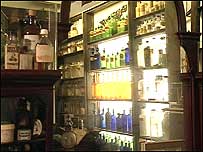 | | Stanley Gibbons had a good knowledge of poisons |
The only real record of her is a photograph which shows her as a rather matronly figure besides Stanley. Georgina survived as Mrs Gibbons for only five years.
But Stanley swiftly moved on to wife number four, Bertha Barth, daughter of a railway clerk. Stanley was now 65 - his new wife was 27. Bertha was with him for three years until she died of cancer of the liver. Less than a year later, Stanley was already adding to his extensive collection of partners.
Sophia Crofts, however, outlived her husband - he died aged 72, on 17th February 1913. Suspicious death
None of Stanley Gibbon's wives bore him any children. But even his death is shrouded in suspicion. The official records say that he expired from a heart attack in his nephew's apartment. 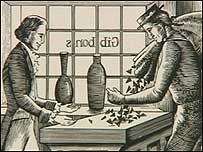 | | From pharmacy to philately - Stanley Gibbons |
But the far more entertaining and tantalising story is that Stanley was in the Savoy Hotel in the arms of his latest passion and was so overcome with her charms that he promptly expired of a heart attack.
Stanley was then bundled up in a carpet and transported from the Savoy Hotel, which is not very far away, to the nephew's pad in Piccadilly. And there the official death of Stanley Gibbons was recorded. Unlucky in love?
So was Stanley Gibbons merely an unlucky husband whose life was blighted by tragedy - or could there be a more sinister explanation? Was he a serial killer and did the skills acquired during those early years in the Plymouth pharmacy prove useful when it came to disposing of unwanted wives? Of the four wives who died we have death certificates for two. The first died of a wasting disease - but there are poisons that can cause wasting disease, notably heavy metal poisoning. His second wife died of cirrhosis of the liver. Yet another is supposed to have died of carcinoma of the liver, the other of liver disease. Mysterious deathsDavid Randall, Assistant Editor at the Independent Newspaper, has researched Gibbon's life and says: "They all died - four of them - very young - very young and in some mysterious circumstances. And Stanley Gibbons was trained as a chemist!"
He believes that the Victorian pharmacist could have had access to drugs or poisons that could resulted in liver failure. Randall says that there is a possibility that Gibbons poisoned his wives. But, like so many aspects of this man's life, we'll never know for certain.
Even at the end of his life, Edward Stanley Gibbons was thought to be planning another change of partner.
In a final twist to this absorbing tale, when his will was published, he'd left the bulk of his estate, not to Sophia his wife, but to Mabel Hedgecoe - a 'dear friend'. Links relating to this story:The BBC is not responsible for the content of external websites | 



 Inside Out - South West: Friday March 2, 2007