STORM CHASERS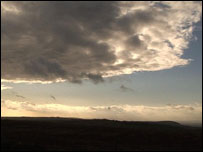 | | Chasing down the storm |
Inside Out goes in search of a weather phenomenon called the 'Spanish Plume'. We join storm chaser extraordinaire, Alister Chapman on the hunt for one of nature's most spectacular sights. When it comes to getting up close and personal with wild weather, Alisters something of an expert.
"Storm chasing is like big game hunting, you get up in the morning and you stalk your prey."
Inside Out's storm chasing adventure takes us to the plains of Spain. The rain in Spain Storm chasing can be a dangerous hobby so having the proper kit is essential. First of all, Alister Chapman videos everything that he sees. There's also a CB radio so he can keep in touch in case anything goes wrong.
His first task is to scan the horizon to see if any stormy weather is forming. But on this occasion it didnt take an expert to figure out the outlook was good - perfect sunbathing weather in fact. So Inside Out goes further inland 200km from Barcelona to the vast plains of Spain. The rain in Spain falls mainly on the plain - in fact, this is where some of our wettest weather comes from. It comes into the South East from here because the region is right on the Greenwich Meridian line, so any weather forming here only has to go 1,000km north where it slams into the South East. Spanish Plume So what does the Spanish Plume look like and is it easy to spot? Basically, when cold, moist air clashes with warm air, we get a thunderstorm. 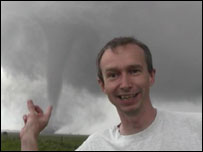 | | Alister Chapman is passionate about stormchasing |
A Spanish Plume happens where warm thundery air moves up from Spain and brings thunderstorms to northwest Europe. It's notoriously difficult to capture one on film due to poor visibility - that's why storm chasers follow the storm as it happens, to ensure they get the best seat in the house.
Alister met Pedro on a storm chasing web forum - weather watching is an international preoccupation. Pedro's prize footage is of a Spanish Plume being created. So how do you get to see a Plume? Madrid is a good place to see this phenomenon because it is in the middle of Spain - a very hot place and perfect for Spanish Plume conditions. Brighton weather  | | Fellow stormchaser Pedro met Alister in an internet chat room |
As well as Plumes, other weird weather phenomena which can be seen in the South East of England include water tornadoes. Helen lives on the outskirts of Brighton, which just happens to be one of the country's hotspots when it comes to waterspouts, or funnel-shaped columns of water and air drawn from the surface of the sea by a tornado.
From Brighton Inside Out drove inland towards Ditchling. The chase was on - finally it looked like our Spanish Plume was rolling in. Could Inside Out finally be on the track of this weird weather phenomenon? Fact file A "Spanish Plume" is the process by which typical British summer storms occur. Spanish Plumes are the result of hot, humid air travelling northwards from Spain colliding with cooler Atlantic air blowing inland. When the humid air meets cooler air massive meteorological instability occurs, resulting in typical summer thunderstorms. A Spanish Plume can cause hazy sunshine in one place and torrential rain in another, just 50 miles away.
Source: Geologywales.co.uk Note - safety first Storm chasing can be very dangerous if undertaken by inexperienced individuals. Storm chasers should always have the proper kit, a safety plan and follow safety rules. The BBC is not responsible for the content of external websites | 



 Inside Out - South East: Monday October 10, 2005