HERO OF THE SOUTH EAST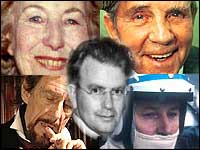 | | Inside Out's five finalists |
The search was on to discover the hero - male or female of course - of the South East. The person who has excelled in their field and enriched the lives of others. We weren't talking about reality TV stars who may be forgotten by tomorrow, but talented, dedicated individuals who have made a difference to the world. A few months ago, Inside Out asked you for your suggestions for the Hero of the South East. The shortlist of five, in no particular order, was: Here are more details on each of our hero finalists…. Vera LynnWho knows how the Second World War would have ended if the British didn’t have their own secret weapon - the morale boosting Vera Lynn. 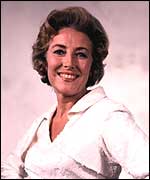 | | Vera Lynn - forces sweetheart |
Born in London in 1917, she’d been singing on stage since the age of seven. Vera was doing reasonably well as a professional singer. But when the war started she went stratospheric. But Vera didn’t just disappear after her wartime role as forces sweetheart. Her singing career continued to flourish, she became a film star and had her own BBC radio series. In 1975 she became a Dame of the British Empire. She settled in Ditchling, East Sussex, where she began to take an interest in charity work, as well as demonstrating against heavy lorries in her village. Norman WisdomNorman Wisdom is undoubtedly one of Britain’s best loved screen comedians. He was actually born in London in 1915, but he was brought up in Deal in Kent. 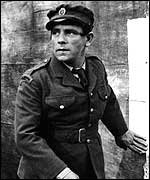 | | High-profile campaigns have highlighted access issues |
Although he brought laughter to millions, his own childhood was unhappy. His father was a violent drunk. When his mother left in 1924, he ended up in care. But from an early age Norman Wisdom showed a tough determination. At the age of 13 he walked from London to Cardiff to get a job down the mines. Norman discovered his talent for comedy while in the Army during the war. And it wasn’t long before he was a film star - especially loved for his slapstick character Norman Pitkin. In 2000, Norman Wisdom was awarded a knighthood. His contribution to the South East continues today, as he is patron of the Astor Theatre Arts Centre in Deal and Patron of the Deal Carnival Committee. John SurteesBorn in Tatsfield, Surrey in 1934, John Surtees is the only man ever to have been world champion on two wheels as well as four. 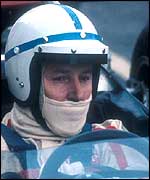 | | High-profile campaigns have highlighted access issues |
John Surtees won seven motorcycle world championships. And as if that wasn’t enough, he went on to win the Formula 1 world drivers title and the North American Can-Am Championship for sports cars. To this day, a corner of Brands Hatch is named after him. Resilience and determination were notable hallmarks of John, and ones that he showed when his CanAm Lola T70 crashed at Mosport Park in Canada. John was badly injured but astonished doctors with the speed of his recovery. These days he’s a property developer. But he finds the time to help youngsters get behind the wheel, and maybe become the champions of the future. Charles DickensBorn in 1812, Charles Dickens' family moved to Chatham when he was a boy and in later life he lived near Rochester. To this day, Rochester holds an annual Dickens festival in his honour. 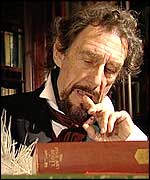 | | Dickens - quintessential Victorian author |
Charles Dickens is much loved for his contribution to English literature. From David Copperfield to Great Expectations, A Christmas Carol to Oliver Twist he is the quintessential Victorian author. Dickens was also very fond of Broadstairs. His seaside home was here in Bleak House. Here he wrote David Copperfield and Bleak House. Dickens visited Folkestone many times in the mid 1850’s. He was often seen climbing up the chalk cliffs. In 1870 Dickens was back at Gad’s Hill when he suffered a stroke and died. He asked in his will to be buried in an inexpensive, unostentatious and extremely private manner. If fact, he was buried in Westminster Abbey. John Logie BairdJohn Logie Baird was born in Scotland in 1888, but he arrived in Hastings probably in 1922. 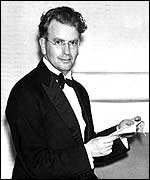 | | High-profile campaigns have highlighted access issues |
Dogged by ill health for most of his life, Baird nonetheless showed early signs of ingenuity by rigging up a telephone exchange to connect his bedroom to those of his friends across the street. John had been tinkering with the idea of sending pictures by wireless since he was a boy. When a business venture making jam in the Caribbean failed, John had the opportunity to experiment with his dream of inventing television. John achieved success in 1926, when he gave the world's first demonstration of true television in his attic workshop in Hastings before some fifty scientists. In 1928 he achieved the first transatlantic television transmission between London and New York. Although he died in 1946, John’s invention arguably had a greater impact on home life than anything else in history. | 



