Young carers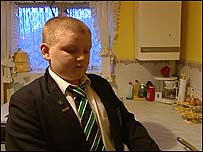 | | Caring for his family - Edward Briggs |
Inside Out looks at the lives of young carers in the North West of England. We look at two young carers and how caring for parents and siblings has affected their lives. Growing up fast Most teenagers expect a lie-in on a morning, but for most young carers, the day starts early. It's seven o'clock and 13-year-old Edward Briggs is making breakfast. Homework and socialising with his friends have to be fitted in around Edward's role as a young carer. Edward's younger brother Thomas has Attention Deficit Hyperactivity Disorder (ADHD) and Aspergers Syndrome which means he needs looking after all the time. Edward and his mum Hazel share the caring role. He takes on a lot of his mum's jobs so she can concentrate on Thomas' needs. He cooks, cleans, helps with the laundry, and supervises his brother when his mum is doing other jobs. "We work like a tag team," says Hazel. There's just the two of them to do all the work. The boys' father left when Edward was two and Thomas was nine months. Edward has had to grow up fast. Taking a break
Edward is by no means alone. | YOUNG CARERS | A young carer is defined as a child or young person under the age of 18 carrying out significant caring tasks and assuming a level of responsibility for another person, which would normally be taken by an adult.
A questionnaire of 150 young carers across the UK found 82% said their school did not make any allowances for their caring responsibilities. Forty per cent of carers said they had problems getting their homework in on time. The survey found 21 per cent of young carers had trouble getting to school because of transport issues. A national survey in 2004 found that 27% of all young carers of secondary school age experience some problems at school.
Anecdotal evidence suggests many young carers miss days off school to care for someone, can fall asleep in class, experience bullying and feel isolated from their peers.
Source: The Princess Royal Trust for Carers |
According to The Princess Royal Trust for Carers there are around six million carers in the UK and around 75,000 of them are aged under 18.
Despite of the work the Trust does in offering carers practical and emotional support, it fully admits that it is only scratching the surface. It's estimated that there are 22,920 youngsters in the North West coping with the extra responsibility of caring for someone.
Carole Cochrane, from the Princess Royal Trust for Carers says, "I think the biggest thing is the isolation." It's hard on the young carers as they can lose out on their childhood in many ways. School is the one place Edward can be a normal 13-year-old boy - it gives him a break from caring. Edward is often the only one who can calm his brother down. When they were both in the same school, it had a big effect on Edward's school life as he would be called from his own class to deal with his brother. Help at hand
If things get too much for young carers, there is help at hand.
Children at Edward's school can make an appointment to see the school mentor to chat through any difficulties or concerns.
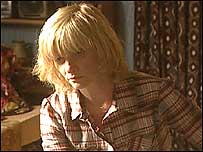
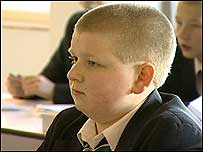 | | Edward Briggs juggles homework and caring at home |
It's also important for carers like Edward to get a break. We join Edward at a bowling session organised by Carers Link at Accrington Superbowl, a group that provides support and offers the children a chance to let off steam and forget their responsibilities at home.
For many it's the only chance for them to relax and wind down.
It's also a chance for an informal chat about how things are going at home.
"I can talk to them about anything," says Edward who believes that activities like this have helped to calm him down. Home work Stuart Cash is now an adult, but he spent much of his childhood as a carer. 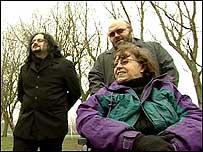 | | Working as a team - the Cash family |
He helped his dad look after his mum Sue, who has MS, from an early age. Stuart was given the freedom to develop his own life but it's not been without its difficulties. Ian and Sue Cash were always conscious that their son Stuart needed a life away from being a carer. Ian has been Sue's full-time carer for Sue for 27 years which has brought its own financial and emotional pressures. He is now Chair of the West Lancashire Carers Centre, which helps other carers with support and advice. A life of their own
Although things have improved in recent years for carers as a result of legislation like the Equal Opportunities Act of 2004, there is still room for improvement. Many carers feel they are a silent majority sacrificing their own careers and lives to help loved ones who otherwise could cost the tax payer a fortune because they would need round the clock hospital or respite care.
One of the biggest difficulties facing Edward and all young carers is developing a life of their own - away from the home. His mum Hazel is hoping that the family will eventually get support from social services to ease the burden on her and the son she's come to rely on. Hazel says that Edward is a fantastic help - she doesn't know where she would be without him.
"He's my rock... I'm proud of him," she says emotionally. Links relating to this story:The BBC is not responsible for the content of external websites | 



 Inside Out - North West: Monday February 20, 2006