Lancaster bombers 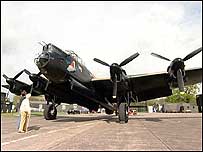 | | A Lancaster bomber restored to its former glory |
On the anniversary of the Lancaster Bomber, Andy Johnson goes on an emotional trip down memory lane with a couple who helped build this iconic plane. The Lancaster is more than a plane
it's a legend of the skies which is part of the North West's heritage. It's also a legend which helped shape the destiny of the Second World War. Its only when you get close to a Lancaster that you realise what an incredible weapon of war it was. It's amazing to think that there are now only four planes left in Britain. The first prototype of the Lancaster flew 65 years ago. The plane began its life at the A.V. Roe works at Chadderton near Manchester. The Lancaster became a key part of RAF bomber command's strategy and was able to strike deep into the heart of Germany. At its peak 38,000 people in the North West were working on the Lancaster. Chadderton was joined by Woodford, Metro VICKERS at Trafford Park, and Chester plus a host of other factories were converted to make parts. Working on the Lancaster The plane's success was an incredible tribute to the hard work and talent of the workers who made the planes. Don and Joan Andrew, who live near Rochdale, both helped build the bombers at the Chadderton factory. 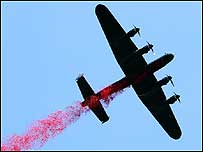 | | A Lancaster bomber commemorates WW2 |
The Lancaster is linked forever in their lives - they've been married for more than 50 years.
Don had served his time as an apprentice draughtsman, and after the outbreak of war worked on the design of the Lancaster. Joan was just 17-years-old, and an apprentice hairdresser at Kendal Milne store in Manchester, when she suddenly had to swap scissors for spanners.
For Don and Joan and the many others working at the Chadderton factory the effort to produce the planes completely took over their lives - the hours were long and the planes were produced at an incredible rate. At one point the workers built 136 Lancasters in a month.
Today the factory and its famous assembly floors lie silent and empty. It will soon close for good.
Bouncing bombs | LANCASTER BOMBER |
Designed by Roy Chadwick. First flight in January 1941. Entered service 1942.
Maximum speed 280mph at 15,000 feet.
One of the reasons for the plane's success was its four Rolls Royce Merlin engines. Renowned for its reliability and best known for taking part in the Dambuster raids in 1943. Primarily used as a night bomber. Between 1942-45 the Lancaster flew 156,000 operations and dropped 608,612 tons of bombs.
Only 35 Lancasters survived more than 100 successful operations. |
The Lancasters were the only planes that could carry and deliver the bouncing bombs which did so much damage to the dams in Germany.
The legacy of those daring raids turned the Lancaster from bomber plane into legend.
But there was a high price to pay. The bomber was an easy target, and more than half of the 7,000 Lancasters produced were shot down. Bomber Command lost more than 50,000 men. Although Joan Andrew spent years making the pilots' consoles for the Lancaster, she never saw the parts assembled into the plane Inside Out takes her to Lincolnshire Aviation Heritage Centre in East Kirkby, home to one of the few Lancasters left today for an emotional trip to see the plane up close and personal. Links relating to this story:The BBC is not responsible for the content of external websites | 



 Inside Out - North West: Monday January 9, 2006