Roadside shrines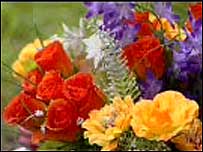 | | Remembering the victims of accidents |
Every year over 3,400 people are killed on our roads. The latest figures show that 185 people were killed on the roads in the North East and Cumbria in just one year. Increasingly the relatives and friends of the victims are creating roadside shrines in memory of their loved ones. Bouquets of flowers, messages and soft toys are left at the scene - sometimes for months, even years afterwards. So are these shrines a timely reminder to us all to slow down - or yet one more distraction on the roads? Remembering the victims
David Cameron from Newcastle was killed by a speeding driver who was weaving in and out of the traffic at high speed. Shortly after the accident people started leaving flowers - a shrine to David was created, and nearly two years on, it's still there. 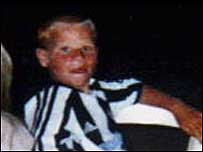 | | Victim of a car crash - David Cameron from Newcastle |
His mother Debbie now visits the shrine about three times a year, on David's birthday, at Christmas and on the anniversary of his death. David's shrine is one of a growing number of shrines appearing on our roads. Debbie has found the shrine comforting: "It was nice to know that people were thinking of us. It was nice to know that he was a popular little boy. "It was nice that people were remembering him this way - and that other drivers know an accident's happened. "If people took notice of the speed and the way they were driving, they'd be no need need for these shrines." Raising awareness? But do the shrines make drivers think about their driving? One person who witnessed David's accident told me it makes her slow down every time she passes the shrine, but others are not convinced. Some transport groups believe that shrines should be used to highlight road safety problems. Roadpeace, a charity for victims, has called for shrines to play a more important role in raising awareness of danger on the road. "A road death is a very sudden and violent death and the place where somebody dies is very special - and that's why people want to be able to go the the last place where their relative was alive. "And from Roadpeace's point of view we think the value is in reminding drivers how dangerous the roads are... and we all might be doing more to prevent it." Zoe Stow, Roadpeace.
Distracting shrines?
Richard Thomas also knows the pain of losing a loved one on the roads. 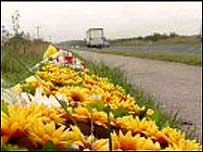 | | Shrines are a frequent sight on roadsides |
His son Charlie was killed on a motorbike, but he's not in favour of shrines by the road: "It's got out of hand. I think a lot of people have seen what's happening in Europe and they've followed on from that." No research has been done to see if flowers on the verge help or hinder road safety, so we did our own. Using the BBC's local Where I Live websites, we asked you if you found flowers by the road distracting. Of those who took part, more than half said 'yes'. 1. Do you slow down when you see bunches of flowers or other tributes by the side of the road?
111 said Yes
30% 2. Do you find flowers placed by the road distracting?
203 said Yes
56% 3. Is laying flowers by the side of the road a suitable way to remember someone when they have died?
168 said Yes
45% A total of 364 people replied to the survey.
Safety symbols
In other countries many people think there is a point to marking an accident. In France they've found a unique way of honouring the victims of road deaths using silhouettes. Jean-Pierre Giraud, an artist, designed some roadside silhouettes after his son was killed on the road. 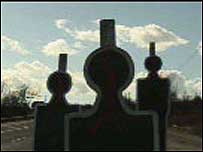 | | Accident blackspot - silhouette signs for safety |
Each silhouette represents a tragedy of a broken family, and when people are driving along it makes them realise it's a dangerous route.
The silhouettes are put up for a month where people have been killed - campaigners say they're making the roads safer. The local highways department erect the silhouettes, and it doesn't ask for permission from the families, as Philippe Lermine from the French Department of Transport explains: "At first we thought families would object, but the opposite is true, I've had people ring me up to say, 'you have forgotten my son who was killed'. "Other areas have taken up the idea, and other countries too. The silhouettes have become a symbol for road safety." "The number of road deaths has been brought down, and some attribute this fall to the signs. "We have brought down the number of road deaths from 8 to 5,000 and I am certain that the silhouettes are part of that success."
Safety first
| FACT FILE |
Every year over 3,400 people are killed on our roads. In 2003 - 171 children were killed on Britain's roads.
We all have a one in 200 chance of dying on the road. Statistically we are more likely to be killed while crossing a road than in a plane crash. Half the people who die on the road are in cars. People most at risk of dying on the roads are 'vulnerable road users' - pedestrians, cyclists, motorbike, and moped riders (this group accounts for 45% of all deaths). Men are three times more likely to be killed on the roads as women. Traffic is the biggest killer of young people aged 15-19. Children under 16 accounted for more than one third of all pedestrian casualties in 2003.
Source: BRAKE |
With no conclusive research on whether they're good or bad for road safety, roadside shrines are proving to be a headache for local councils. Inside Out contacted councils in our area and found there is no clear policy. Some remove flowers after a few weeks, while others decide what to do with each individual shrine. One northern council told us that it's considering allowing permanent memorials. But not everybody agrees, even the families of the victims. As a committed Anglican Richard Thomas believes the graveyard is the place to remember. Charity Roadpeace has another solution to those who say that they roadside shrines look untidy when the flowers decay. They've come up with a standardised sign with the words 'Remember Me' on it. Half of the people in our survey said that they thought flowers were an appreciate way of remembering someone. It seems that the debate on roadside shrines will continue to divide opinion. Links relating to this story:The BBC is not responsible for the content of external websites | 



 Inside Out - North East: Monday February 27, 2006