Countering change | 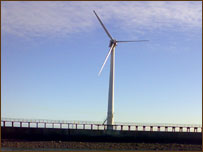 | "How seriously are we taking climate change in the North East and Cumbria?" |
Countering climate changeNorth East and Cumbria residents are amongst the most apathetic in the UK, when it comes to the greening of our planet. In a recent survey, although 65% of people in the region believed that people were responsible for climate change, only 50% were prepared to make the necessary changes to their lifestyle. On the other hand, Inside Out has discovered that inventors and businesses in the North East are leading the way in combating climate change. In the programme, Chris Jackson goes out and about to discover what is going on in the region. 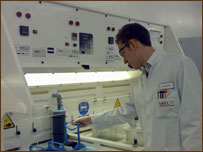 | | Crystalline cell research is at the cutting edge in Blyth |
His first stop was on the Northumberland coast and a glimpse into the future. Photovoltaic power generationIn Blyth, scientists are making the next generation of solar panels. NaREC's Photovoltaic Technology Centre is the only commercial crystalline cell research and development laboratory in the UK. Using a pilot production line, NaREC is creating new manufacturing techniques, working to provide the expanding photovoltaics industry with the manufacturing solutions needed.  | | Wind farm provides enough electricity for 2,240 households |
Wind powerThe UKs first offshore wind farm, Blyth Offshore Wind, consists of two 2-Mega Watts turbines erected 1km offshore from Blyth Harbour, Northumberland. With a maximum capacity of 4 MW it provides enough electricity for over 2,240 households. The Blyth Offshore Project was the forerunner to similar schemes now planned off the coasts of Ireland, UK, Netherlands, Belgium, Denmark and Sweden.
Green cabbieEcocabs is a new taxi service for Hexham whose cars run on Biodiesel.  | | Biodiesel is used and produced by North East companies |
Biofuels Corporation plcBiofuels has completed the building of its first 250,000 million tonnes biodiesel processing plant at Seal Sands. Their biodiesel production, equivalent to some 284 million litres of biodiesel, uses vegetable oil crops as the feedstock. Willow wood chipSembCorp Utilities UK is planning to burn 'Short Rotation Coppice' willow wood chip in its £60 million Wilton 10 biomass power station, which will start production at Wilton on Teesside shortly. This power station will consume up to 55,000 wet tonnes of Short Rotation Coppice wood chip annually. The intention is to source the willow coppice from local farmers. In addition, around 240,000 tonnes of forestry logs, sawmill chips and recycled timber will also be used annually at the station.
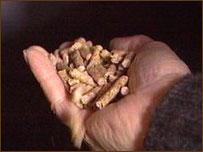 | | The willow wood is pelleted and then burnt |
This use of renewable and recycled resources for power generation delivers reduced emissions of greenhouse gas carbon dioxide when compared to fossil fuels as well as ensuring reliable and secure energy derived from UK grown fuels. The process is claimed to be carbon neutral. The first batches of 'Short Rotation Coppice' willow wood chip were grown at the Seborwens Farm in Penrith, which is owned by the University of Central Lancashire.
Most of the fuel wood was recycled, with the rest coming from local forests like Kielder. The boilers have wood chips fed into the furnaces at 40t an hour. So again, when you flick the kettle on you could be greener having done nothing at all When it starts running later in 2007 the power station will provide green electricity for 30,000 homes Industry industriousSo remember the survey and how almost half said they would not change lifestyle to slow down global warming? Well, Inside Out discovered there are plenty of companies in the North East doing the work for us, making a difference when we just cannot be bothered. They have woken up to what is happening to our world. The question is, when will we wake up? Have your say... We want your views on climate change. Email insideout@bbc.co.uk with your comments and we'll publish a selection of them following the programme.
Links relating to this story:The BBC is not responsible for the content of external website | 



 Inside Out - North East and Cumbria: Friday March 30, 2007