 | "It was brutally harsh..."
Kwame McKenzie | Kwame McKenzie investigates slavery's legacy |
The Legacy of SlaveryThe slave trade was abolished 200 years ago, but its legacy may still be with us. Some experts believe that the sheer breadth and scope of slavery's assault on black people and their spirit created an extreme, long lasting trauma. It's thought that this trauma may have been passed from one generation of Black Britons of Afro-Caribbean descent to the next. Inherited traumaCould this idea of 'inherited trauma' help explain why young black pupils over the age of 10 don't perform at school as well as their counterparts from other ethnic groups?  | | Rapper Akala talks of slave's tentacles reaching out today |
Could it help explain why some studies show that incidences of schizophrenia in Afro-Caribbean people are between two and eight times higher than in the white population? Could it even help explain the 'Baby Father' syndrome where many black fathers absent themselves from their role in bringing up their children? Senior Lecturer in Psychiatry at University College London, Kwame McKenzie, meets people with strong views on either side of this controversial debate. What's in a name?During slavery Africans had their traditional names stripped away from them and were forced to adopt European ones instead. Dr Lez Henry says: "I know that Im an African but its taken me a bit of time to do some research into what peoples like me have contributed to civilization for millennia. "But if... the only introduction you get to being an African is being a slave, and that you were freed and that you are still catching up, of course you would want to disassociate yourself from that history and this is what happens in schools."
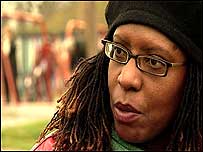 | | Claire Felix - a name speaks volumes |
For some mental health experts like Rethink's Claire Felix, these feelings of alienation are deepened by not being aware of your cultural heritage or identity. She says that this can extend to something as simple as a name which can lead to an identity crisis: "If my name is Claire, where do I come from? what does that tell me? It tells me nothing about my past, it tells me nothing about my family or heritage
"Taking away their name was one way of dehumanising them. "So by removing someones name were saying that you are nobody, again its way of control, taking control
"A name is important it tells you who you are, its a way of maintaining tradition."
Traumatic legacy?
Supporters of Post Traumatic slavery syndrome also believe that slaverys legacy has got inside the black communitys heads. They believe that it helps account for the high levels of serious mental health problems found within the African Caribbean community. 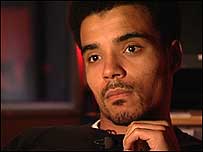 | | Black men weren't allow to show emotion during the slave trade |
They say that this might account for why some studies show that incidences of schizophrenia in Afro-Caribbean people are between two and eight times higher than in the white population Could Post Traumatic slavery syndrome also go some way to explaining the Baby Father syndrome where many black fathers absent themselves from their role in bringing up their children? For some this is seen as simply modern day men running away from their responsibilities, but supporters of Post Traumatic slavery syndrome believe that it could be something to do with what happened during slavery. They believe the experience of todays single families can be partly explained by the brutally harsh lives lived on the plantations. Slave masters tried to keep control of their slaves by splitting up families, and stopping slaves from forming normal relationships. Musician Akala has his own strong views on this: "If you showed any emotion or any love for a female you would be killed or you would be separated from her, because the slave master knew that if you love a woman and you love your children, then you have an attachment to them. "You are going to fight for their freedom at some point."
Akala also draws direct links between life on the plantations and life on the streets of London today. Looking to the futureMany people argue that focussing on slavery simply ignores the long history and deep heritage of African Caribbean people's and promotes a victim culture. 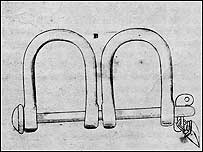 | | Thomas Clarkson's historic slave trade drawings. AP Images |
Others are equally adamant that it's something that needs to openly dealt with - in order to move on. No one is suggesting that all society's ills can be laid at slavery's door. But if we are serious about to building a better future for our children, Post Traumatic Slavery Syndrome raises questions which hard to ignore.
Links relating to this story:The BBC is not responsible for the content of external websites | 



 Coming Up : Inside Out - London: Friday March 2, 2007