 | Fingerprint technology is moving ahead fast |
FingerprintsNew fingerprint technology is making it easier to catch criminals. Dr Sue Jickells from Kings College, in London, is undertaking research that could make it easier for police to find a suspect's age, gender and even dietary habits. A simple fingerprint can now detect whether a criminal is a drug user, has recently consumed alcohol or can link a crime with a suspect - all through chemical testing of fatty acids left from fingerprints. New technology Old technology of ink fingerprinting, which could take weeks, is being phased out for more efficient techniques such as new laser scanning technologies, taken in minutes and checked against the database within an hour. Police are already using portable laser fingerprint scanners and airports are implementing biometrics scanners. 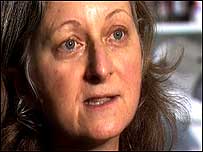 | | Groundbreaking research - Dr Sue Jickells from Kings College |
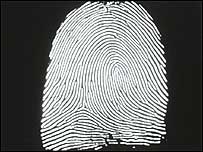
Fingerprint chemistry can aid in criminal detection when a fingerprint is not recognised on a database and when there are no witnesses. Now the simple fingerprint could give a lot more away than before. Dr Sue Jickells' work research started by looking at the chemical components of prints and how they change over time. She says that much of the material left behind when people touch anything are fat molecules, or lipids. One lipid, called squalene, a precursor to cholesterol, is strongly present in fingerprints. Squalene breaks down over a number of days, as do the saturated and unsaturated fatty acids left behind by human touch. This makes it harder for traditional techniques to reveal prints. Good evidence from printsDr Jickell has been working on ways to get good quality evidence from relatively old prints. 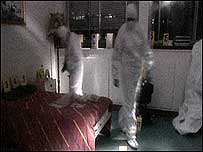 | | New fingerprint technology is helping to solve crimes |
Her research has also shown how fingerprints can be utilised to provide clues about the person that left a print. It also reveals that adults, children and old people lay down different types of organic compounds in the prints. Also, smokers are known to secrete cotinine, a chemical produced when the human body breaks down nicotine. Further work is now ongoing on looking at methadone clinics and drug centres to see how drug use changes the prints users leave behind.
A brief history of finger printing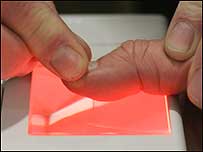 | | New style fingerprint scanning technology |
Fingerprinting has a long history but there is no definitive date for when it was first used. Prehistoric picture writing with ridge patterns have been discovered in Nova Scotia, Canada. Fingerprint impressions have been found in government papers from 14th Century Persia. In 1686 Malpighi from the University of Bologna referred to the value of spirals and loops in fingerprints for individual identification. In 1858 William Herschel, a British Administrator in Bengal, made the first practical application of fingerprints for personal identification as signatures on contracts. In 1880 Dr Henry Faulds looked at the possibility of identifying criminals from fingerprints left at a crime scene. Faulds offered the concept to the Metropolitan Police in London in 1886 but it was dismissed.
Sir Francis Galton published an in-depth study of fingerprint science in 1892.
Juan Vucetich, an Argentine police officer in 1892, made the first fingerprint identification at a crime scene. He also opens the world's first fingerprinting bureau.
The world's first Fingerprint Bureau opened in Calcutta, India in 1897.
The first United Kingdom Fingerprint Bureau was founded in Scotland Yard in 1901. The Henry Classification System was accepted in England and Wales.
Links relating to this story:The BBC is not responsible for the content of external websites | 



 Coming Up : Inside Out - London: Friday January 19, 2007