THIS WEEK'S HIGHLIGHTSMigrant Workers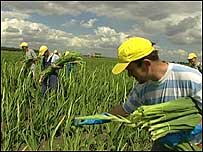 | | Migrant workers - jobs on the land but at what price? |
For some they are the backbone of the economy but for others they are a threat. Inside Out investigates the growing number of migrant workers in the East Midlands. There's an influx of a new type of foreign worker who has come to the region to make a living.
Young, highly educated women are leaving their families behind to come to Lincolnshire's towns and villages to earn money for a better life. Yet they aren't welcomed by everyone. But what is the reality? How do the new migrants live? We've discovered one farmer who has spent £2m building accommodation complete with a sports centre, and runs it like a boarding school, to keep his workers happy. New livesin Lincolnshire
Elena and Darshute have new lives in the Lincolnshire market town of Boston. Both are part of the new wave of migrants coming to the county from Eastern Europe. | "I can earn more money in one week here than I can earn in months in Latvia." | | Alona, migrant worker |
Darshute has come to England in search of work. "There are no jobs where I come from," she says. Alona left her home in Latvia two years ago. She's got a degree in law and economics, but was prepared to come over here to work on the land.
Darshute tells the same story - in Lithuania she worked as the deputy head of social services. But with monthly wages of £100 and a worsening economy, she and her husband paid to come to Lincolnshire to try for a better life. | MIGRANT WORKERS | Many migrant workers are subject to such levels of exploitation and control that they meet the international legal definition of 'forced labour'. It is believed that there could be 3,000 rogue gangmasters operating nationwide. Job sectors with high numbers of migrant workers include construction, hospitality, agriculture, food processing, horticulture, contract cleaning, nursing and care homes. There have been several fatalities involving migrant workers employed in the UK.
In one notable incident more than 20 Chinese workers died picking cockles in Morecambe Bay. Workplace deaths in the UK are increasing and there is a danger that we could soon start to see more fatalities and serious injuries at work as language barriers mean safety messages are going over workers' heads. Employers have a duty under the Health and Safety at Work Act to provide all their employees with the appropriate safety training to enable them to do their jobs without risk of illness or injury.
However the TUC found that safety training delivered in English was not being sufficiently well understood by migrant workers. This prompted the Health and Safety Executive (HSE) and the TUC to publish a new safety leaflet for employers translated into 19 different languages.
Source: TUC |
Jobs on the land Some commentators call this form of work ''cowboy capitalism'. And many agencies and trade unions believe that migrant workers are among the most vulnerable of all workers. A recent TUC report reveals a number of problems for migrant workers including:
- very long hours
- pay below minimum wage
- dangerous working conditions
In their defence, employers say foreign workers are filling the jobs that local people just don't want. There are 70,000 agricultural workers who are thought to be foreign nationals in Lincolnshire. What used to be seasonal work is now year-round, fuelled by consumers and supermarkets wanting fresh vegetables 24 hours a day, 12 months a year. But this explosion in the workforce has put extreme pressure on accommodation and led to some unscrupulous gangmasters exploiting desperate foreign workers. The influx started with Portuguese workers arriving, but now Eastern Europe is becoming the favoured recruiting ground. But what happens when it all goes wrong? Inside Out visits Boston's only drop-in centre for homeless people which has been left to pick up the pieces. Links relating to this story:The BBC is not responsible for the content of external websites | 



 Inside Out - East Midlands: Monday September 19, 2005