 | | | | |  Coming Up : Inside Out - East: Monday October 10, 2005 Coming Up : Inside Out - East: Monday October 10, 2005 | | Trouble on the Tracks 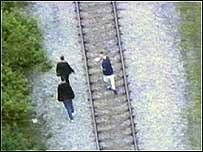 | | Blood on the tracks - dangerous behaviour can kill |
Railway crime is a big and growing problem. In the East, Essex is the worst hotspot with four to five incidents reported every day. Driver Chris Norris says that he thinks the problem is getting worse, with children using mobile phones to send pictures of their dares on the line. | RAILWAY CRIME | Trespassing on or near railway lines is a criminal offence which carries a fine of up to £1,000. You can be charged with endangering safety for obstructing trains or throwing missiles, which carries a maximum penalty of life imprisonment. The number of offences recorded by the British Transport Police are increasing, with approximately 35,000 offences of vandalism or trespass recorded in 2004. Source: Track Off |
Many are caught on CCTV - the footage is shocking - showing kids standing in front of approaching trains, and throwing missiles on the line. According to Track Off, the top "hot spots" for railway crime in the East of England are Bishops Storford, Enfield Towen, Hockley, Northumberland Park, Ockendon, Pitsea, Thetford, Tilbury Town, Turkey Street and Wickford. Now British Transport Police and the rail companies are using helicopters to try to catch the kids before its too late. Paul MacDonald was one of those children. He paid the price for games on the line - it cost him his arm. He has a strong message for any children thinking about playing on the tracks - don't do it. Links relating to this story:The BBC is not responsible for the content of external websites | | | Inside Out Archive | Inside Out: East
View our story archive to see articles from previous series. | |
| Free email updates | Keep in touch and receive your free and informative Inside Out updates.
Subscribe
Unsubscribe | |
| Papworth - a history of innovation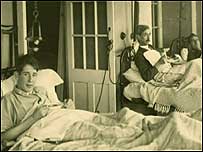 | | Papworth patients - innovative Tuberculosis treatment |
Papworth in Cambridgeshire is best known for its innovation in heart surgery. But it started as a centre for a very different innovation. Tuberculosis killed nearly 400,000 people in Britain between 1926 and 1935. It was the grim reaper of the early 20th Century. The Papworth TB colony was on the front line in the battle to save the survivors. | TUBERCULOSIS | Tuberculosis is a disease caused by an infection with the bacteria Mycobacterium tuberculosis. TB is primarily known as a respiratory lung disease, but can spread through the blood to all bodily organs. TB is spread by airborne bacteria, which, when inhaled, takes six weeks to develop before any symptoms are shown. Symptoms include coughing, tiredness, loss of appetite, weight loss and fever. During the 19th century, up to 25 per cent of deaths in Europe were caused by TB, but this decreased as living standards improved and more effective medicines were developed. Three million people will die this year from this disease - mainly in less developed countries due to poverty and malnutrition. The number of cases of TB in the UK is rising and a vaccine is recommended for higher risk groups such as children and elderly people. Source: NetDoctor |
What happened at Papworth changed the face of TB treatment forever. And it was all down to one man - Pendrill Varrier Jones - he realised people needed work as part of their recovery. But rather than sending them out into the world where they often fell ill again, he created work for them on the site of the colony. "Papworth Industries" was born
providing factories and jobs for patients. Many remained here for years.
This was 30 years before the creation of the NHS, when doctors were only responsible for treating patients - not their care afterwards. Varrier Jones' approach was revolutionary. Even today the Papworth Trust exists providing work for people with disabilities. Unique archive and ex patients testimony tells the whole story. Links relating to this story:The BBC is not responsible for the content of external websites | Re-enter the dragon 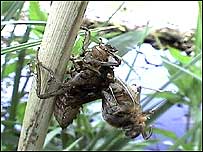 | | Super fly - this Dragonfly is a rare sight |
Dragonflies arrived on earth before the dinosaurs. Yet they're still with us today as Inside Out discovers. Although many of their watery habitats are threatened, enthusiasts are helping to preserve their homes. These beautiful creatures spend two years in the water as nymphs, before emerging and taking to the wing. | DRAGONFLIES | There are approximately 5,300 known species of Dragonfly in the world, dating back over 300 million years. Dragonflies can be split into two groups - hawkers and darter/chasers. Hawker Dragonflies are usually bigger and faster than darter/chasers, with longer bodies and a wider wingspan. Some Dragonflies can fly at speeds of up to 30 mph. Dragonflies can be found in almost any wetland habitat where they prey on smaller insects for food. Over the last 40 years three species of Dragonfly have become extinct as a result of destruction of their habitats by pollution and global climate change. Source: British Dragonfly Society |
We visit a secret site in Norfolk, home to one of the rarest, the "Scarce Chaser". We also join a group of Dragonfly spotters in search of the great "Norfolk Hawker". Dragonfly spotting is becoming increasingly popular. As well as being fun, it is helping to raise awareness of the need to conserve the Dragonfly. For more information on this beautiful and delicate creature, contact the Norfolk Wildlife Trust and the British Dragonfly Society - see web links below. Links relating to this story:The BBC is not responsible for the content of external websites |
|



