RETURN TO RWANDA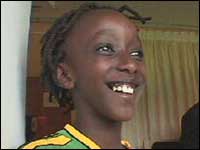 | | "I am looking forward to finding out more about my dad and looking forward to seeing my family - especially my cousins". | | Roger Nsengiyumva | | FOLLOW ROGER'S JOURNEY |
It's 10 years since the genocide in Rwanda in which nearly one million Tutsis were killed. Ten-year-old Roger journeys back to his home country for the first time to learn more about the genocide which took the life of his father. Roger Nsengiyumva was just nine days old when his father John was killed in the Rwandan genocide. His mother Illuminee, and Roger fled the country and began a new life in Norwich. Inside Out joins Roger on his first visit to Rwanda. His mother has not returned since fleeing her home 10 years ago. Rwandan genocide - a backgroundBetween April and June 1994, an estimated 800,000 Rwandans were killed in the space of 100 days - the largest genocide in modern times. 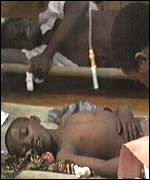 | | The Rwandan genocide is one of the worst atrocities of the last century |
The genocide was sparked by the death of the Rwandan president, Juvenal Habyarimana - a Hutu - when his plane was shot down above Kigali airport. The president's death may have been the initiating factor in the genocide but there is a long history of ethnic tension between the Hutus and the Tutsis dating back to Belgian colonial occupation in 1916. The Belgians segregated the two groups and considered the Tutsis superior to the Hutus. For the following 20 years, the Tutsis enjoyed better jobs and educational opportunities than their neighbours. Resentment among the Hutus grew and in a series of riots in 1959, more than 20,000 Tutsis were killed. When Rwanda was granted independence in 1962, the Hutus gained control and in following years, the Tutsis were to be the scapegoats in every crisis. Massacre| 1994: RWANDA'S GENOCIDE | - April: Rwandan president Habyarimana killed in plane explosion
- April -July: An estimated 800,000 Tutsis and moderate Hutus killed
- July: Tutsi-led rebel movement RPF captures Rwanda's capital Kigali
- July: Two million Hutus flee to Zaire, now the DRC
Source:
BBC News Online |
It was never established who was behind the killing of the president, but the result was catastrophic. Within hours of his murder, a three month campaign of violence spread from the capital throughout the country. Encouraged by the presidential guard and radio propaganda, an unofficial militia group called the Interahamwe (meaning those who attack together) was mobilised. At its peak, this group was 30,000-strong. Soldiers and police officers encouraged ordinary citizens to take part. In some cases, Hutu civilians were forced to murder their Tutsi neighbours by military personnel. Participants were often given incentives, such as money or food, and some were even told they could claim the land of the Tutsis they killed. AftermathIn July, the Rwandan Patriotic Front (RPF) - made up of Tutsi refugees - captured Kigali. 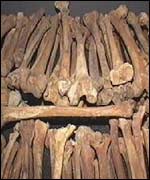 | | Nearly one million people were slaughtered in 100 days |
The government collapsed and the RPF declared a ceasefire. Once it became apparent that the RPF gained control, around two million Hutus fled to Zaire. In Rwanda, UN troops and aid workers helped maintain order and restore basic services. Around 500 Hutus involved have been sentenced to death and another 100,000 are still in prison, yet some ringleaders managed to avoid capture. Ten years may have passed, but the legacy of the genocide will continue to haunt the lives of Tutsis, like Roger and his mother for generations to come. Visit the photo gallery to follow Roger's emotional journey to his home country of Rwanda. | 



