ANTIQUES - BEWARE OF THE KNOCKERS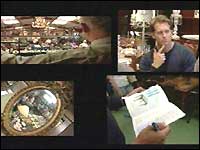 | | Knockers have their eyes on your antiques |
You may be aware of the pitfalls when it comes to door to door selling, but what about door to door buying? Known in the trade as knockers, they doorstep the vulnerable with their eyes firmly on those treasured antiques. Mrs Smith (not her real name) from from Hadleigh, Suffolk, who wishes to remain annonymous, knows all to well about the activities of this unscrupulous trade. A few months ago, a well dressed, well spoken man in his early forties, arrived on Mrs Smiths' doorstep attempting to rid her of an antique chest of drawers - he was not going to take 'no' for an answer. Unfortunately, Mrs Smith is not alone. Although the practice began on the south coast, knockers now operate throughout the country. "These people push the borders of legality," says Detective Inspector Perkins. "They try to persuade people to part with property they may not want to part with
accepting prices well below market value." 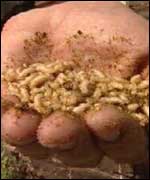 | | Maggots are used to trick owners into selling their treasures |
Tricks of the tradeNot one to be easily fooled, Mrs Smith assured the caller that she had no desire to part with her property. However the knocker had a trick - literally - up his sleeve! A handful of live maggots posing as furniture beetles were slyly placed in the drawer before the knocker offered to take the chest away for free woodworm treatment. Paul Hendry, a reformed knocker, informs us that in the trade this is known as the Australian woodworm trick on account of the creatures working their way up from 'down under'. Old hat Knocking is by no means a new phenomenon. It dates back to 1964 when a Brighton By-law banned fruit and veg sellers from working on the streets. The sellers adapted their patter from selling to buying and began talking their way into people's houses, parting them from their antiques. Paul Hendry began his career as a knocker when he was only a child. "I went on the knock aged 14 in 1978," explains Paul. "In the first week I had earned £200 which was about two or three times the weekly wage of a man." On tour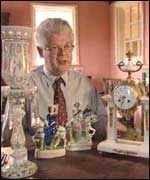 | | Alan Smith reveals how auction houses are fighting back |
And Paul was not alone. In the past, knockers worked in large groups of anything up to about 50 people. Cheap holiday accommodation offered at seaside resorts would form the perfect base for the knockers - Great Yarmouth Butlins was a particular favourite informs Paul. Today, knockers usually operate in smaller groups, calling upon 'heavier' knockers, or even burglars for the more resistant clients! Fighting backIn a bid to crack down on illegal dealing, auction houses in Norfolk introduced a code of due diligence eight years ago. The principle is a simple one. All sellers at auctions are paid by cheque. For this, name and contact details are needed - a requirement guaranteed to send rogue dealers packing as Alan Smith explains: "The more the auction scene can do to make it difficult for the thief to sell goods by auction, the less attractive it is to steal in the first place." But until doorsteps become knocker free, Paul has this piece of advice. "Any person who is going to knock on your door and offer to sell something, or buy something off you - close the door!" | 



