NIGHTHAWKERS - THE ILLEGAL METAL DETECTORISTS | | EYES DOWN | the search for treasure is not just a walk in the park |
You need a keen eye and plenty of patience to be a metal detectorist. For one man, his patience has certainly paid off, but will others be pipped at the post by nighthawks? Inside Out delves into the world of detectoring. Meet Mike Rutland, washing repair man to the stars - well, Inside Out’s Big George at least, and the finder of buried treasure. Mike is a metal detectorist and his patience finally paid off after he uncovered very rare, bronze age gold bracelets on a site near Milton Keynes. "When I first looked into the hole, I knew it was exciting, but I lifted out the first of the bracelets and realised how heavy it was, I swore. It was amazing," says Mike's detectorist partner, Gordon Heritage. 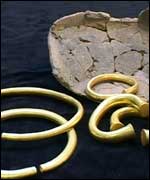 | | Mike and Gordons' patience certainly paid off when they discovered bronze age bracelets |
These are the first bracelets of their kind to be discovered in this country and have been valued by the British Museum at an amazing £290,000 - although Mike insists this is excellent value for money! Rich in historyAnd it seems that there is no better place to be a metal detectorist than East Anglia. Thanks to the rich history of the area and the non-corrosive soil, there are more finds in this area than anywhere else in the country. But before you grab your trowel and head for the nearest field, take heed, unearthing a discovery is a complicated process, if you follow the correct channels that is! All finds must be declared and taken to a local museum or archaeological centre. The museum then notifies the Site and Monuments Record. | Treasure | - A find is regarded as treasure if it is:
- more than 300 years old
- more than 10% gold or silver
- The finder has to report it to the local coroner within 14 days.
- The coroner takes the find to a local museum or archaeological centre.
- The museum receiving the find has to notify the Sites and Monuments Record.
- If the find is important, the site will be excavated.
- If the museum decides to keep the find, the coroner holds an inquest to decide if it is treasure.
- If it is treasure, it is valued by the Treasure Valuation Committee.
- The money is shared between the landowner and the finder.
|
If the museum wants to keep the find, a coroner holds an inquest to decide if it is treasure. The independent body, the Treasure Valuation Committee, are responsible for valuing the treasure and any money is split between the land owner and the finder. Mike and Gordon followed such procedures and after two years of complicated, bureaucratic wrangling, they each received £89,000. But was it worth all the trouble? Yes - but only just explains Gordon: "It's a relief that it's now over. At one point in the whole process, I wished we'd never found the hoard." "We did everything right and it seems as if we were punished." Nighthawks | | Reporting the find caused endless headaches for Gordon and Mike - their reward materialised after two years |
So recovering a find may not be as easy as it first seems and there are some who chose to shun the legal route altogether in favour of a quicker, more profitable answer. They are known in the business as ‘nighthawks’. Nighthawks trespass on to land and any finds are sold on to unscrupulous dealers, rather than officially declared. The nighthawks are unintentionally aided by the Treasure Act of 1996, which stipulates that all finds must be published, thereby alerting rogue detectorists to sites. Nighthawks also gain information by joining legitimate metal detectors clubs. Inside Out met one farmer who has been plagued by nighthawks, ever since his land was declared an Ancient Monument Site. Stealing the nation's heritage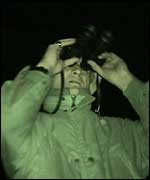 | | John Browning has suffered the nuisance of nighthawks for over 20 years |
John Browning has suffered the nuisance of nighthawks on his land since 1981. He has had ten on his land in the last two months and one, the very day before Inside Out arrived! "The nighthawks, thieves I call them, are looking for the jackpot," explains John. "They're motivated by money, greed and have no interest in history whatsoever." Not only do they cause damage to John’s crops, they are pilfering our nation’s heritage. Several illegal British finds have ended up in the USA. In the past, the police have been extremely pro-active and John even had his own pre-arranged code word to report the nighthawks. In all, 30 people have been caught nighthawking on John’s land, with some turning violent on arrest. Most got away with small fines, whilst two got short prison sentences. So a pastime for the faint of heart - it isn’t! But if you still think you could be the next finder of buried treasure - the legal way - why not contact your local Metal Detectors club? If not - you can rest easy safe in the knowledge that buried treasure it may be, but easy money it is not! With many correct channels to pass through and nighthawks only one step behind, maybe your trusty trowel could be put to better use in the garden! | 



 Inside Out - East: Monday March 3, 2003