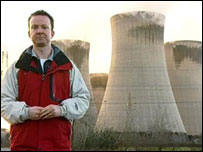
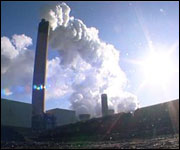
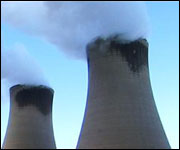
Paul said he was once sceptical about climate change but is now convinced he's seeing a real change in the region’s weather patterns. "What was once science fiction is now in my opinion a fact. I've been watching our weather for the last fifteen years. I've seen what the future holds – and it’s not looking good," said Paul. But an opinion poll commissioned by the BBC and carried out by ICM for the programme shows scepticism about climate change among the people of Yorkshire and Lincolnshire. It reveals 22% of people believe human activity isn't responsible for climate change – and 41% say they have no plans to alter their lifestyles and that includes using their cars or flying less. Paul names the region's biggest producers of carbon dioxide – one of the gasses scientists now believe is responsible for accelerating climate change – and meets the residents of the leafy town who are leaving Yorkshire’s biggest carbon footprint. "Our climate’s changing – and it's changing fast. Carbon emissions from transport, business and our homes are making things a lot, lot worse. In other word’s, we're all responsible," said Paul. Latest figures from the Environment Agency reveals that Drax, the UK's largest coal-fired power station situated near Selby, is by far the region's largest producer of CO2. In 2005, it produced more than 21 million tonnes of carbon dioxide – that’s the equivalent of the annual CO2 produced by six million cars. Power generators and heavy industry dominate the Environment Agency figures. “Power generators say they're doing their bit to reduce carbon emissions, a new turbine here and more burning of bio fuels and biomass there. There’s even talk of storing carbon under the North Sea.” said Paul. “But for me there’s only one way forward and that’s more investment in renewable energy. "How about a barrage across the Humber estuary to harness tidal power? I’m also baffled by the resistance to wind farms in some quarters – in my view there’s simply not enough of them.” “The big question we're going to have to grapple with though, is whether a nuclear power station or two along the East Coast proving carbon free energy might well play a part in meeting our future needs. "However, there are still doubts about what we would do with the waste. The truth is, there are no easy solutions in the battle against climate change” Inside Out is on BBC1, every Friday at 7.30pm. | 








 Listen to the
  Watch the