 | 13 November 2014 |

| |
| BBC Homepage | | |
| |||
| Contact Us | | |
Places FeaturesYou are in: Humber > Places > Places Features > Barns: to save or not to save 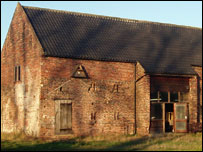 Are our barns worth saving? Barns: to save or not to saveHistorical farm buildings in our region are fast becoming derelict and are at a high risk of decay due to agricultural practises, according to a report issued by the English Heritage. But is arable farming really the fundamental issue behind our crumbling heritage and how much of an asset are our dilapidated barns?According to the latest edition of the report, Heritage Counts, traditional farm buildings are more at risk from pressures on the countryside than any other type of historic building. It claims that thousands of barns, wagon sheds, outhouses and stables face disuse and dereliction. Many others are poorly converted, detracting from the character of the countryside around them. The change in agricultural practices and the economic pressures on farmers makes it also the most vulnerable. Simon Thurley, chief executive of English Heritage, said: "I am afraid there is an alarming conclusion to be drawn from this report that farm buildings, in common with many other types of traditional building in urban areas such as police stations, courts and schools, are now falling out of use very rapidly. "Because they are falling out of use, they are vanishing fast and we now know that these buildings are more at risk from current pressures on the countryside than any other type of historic building in England.” However, it’s not all doom and gloom for our region’s heritage. According to Elizabeth Bailey, the regional policy officer for English Heritage Yorkshire and Humber, the percentage of the number of buildings at risk is fewer than that of the national average. 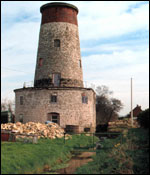 Hibaldstow Mill is one of 12 buildings at risk Ms Bailey said: “The Humber sub-region, comprising the East Riding of Yorkshire, City of Hull, North East Lincolnshire and North Lincolnshire Unitary Authorities, has 3,985 listed buildings. Of these, 383 (9.6%) are grade I or grade II*; which is higher than the regional or national proportion, and reflects the high number of highly graded medieval parish churches in the sub-region. “In the Humber, 3.1 per cent of grade I and II* buildings are at risk. This is better than the regional and national averages 4.6% and 3.4% respectively.” Cultivation the culprit?One of the key findings in the report for the Humber state that 80% of the listed buildings and monuments in the region are on arable land and are ‘vulnerable to plough damage’. But, according to the National Farmers Union, it’s through cultivation that treasures of the past have been uncovered. Andrew Clark, head of policy services for the National Farmers' Union, said: “If farmers are told where historic features can be found on their farms, then they can do something to conserve them. “The vast majority of field monuments known to exist are found on or under farmland, in fact often it is ploughing that has resulted in new sites being found, as bits of pottery or tiles are brought to the surface. Centuries of farm management of the land following the original use they would have been destroyed long ago, for example under roads or buildings. “In some circumstances, the archaeological remains may be very near the surface and easily damaged, in other situations well below plough depth and so only vulnerable to drainage works or deep ploughing. "English Heritage published guidance on protecting these field monuments earlier this year.” added Mr Clark. Preserving the pastOne way of preserving the region’s heritage is by transforming them into commercial enterprises, an initiative that one local farmer has already put into practice. Robert Patchett is a farmer in the East Riding. The farming business has been passed down the blood line for over 100 years. He owns three farmsteads, each with a large barn on their plot. Of the three barns, only two are currently in use. Mr Patchett said: “A few traditional farm buildings can have uses for commercial farming, but frankly most are too small for any use in these days. In today's world, labour is expensive - and fraught with regulation and legislation - so most work has to be mechanised needing larger buildings with clear access. “On one farm we have a large old barn which makes a very good fertilise and seed corn store. Apart from this the main value of traditional buildings to us is where they can be used for alternative enterprises. For example, we have one large old barn used as a workshop by a furniture maker. “The scope to which this can keep old buildings going depends entirely on the attitude of the planning authorities, which has recently become increasingly against conversions.” The cost of heritageIn most cases, landowners are finding planning permission difficult to obtain for converting their property and, as a result of the tight legislation, advice is the most they will receive for support in protecting their heritage. Steve Devey, the conservation team leader for the East Riding Council, said: “We work closely with developers and landowners to secure the future of such buildings and have run three grant schemes in Howden, Market Weighton and Bridlington Old Town specifically dedicated to this aim.” 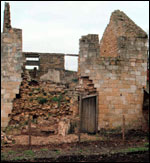 Adlingfleet Medieval Rectory “Where we have no financial support to offer we work closely with landowners and developers to find solutions to problem buildings.” added Mr Devey. Even when a listed building is restored, private owners are still faced with growing repair bills and falling cash support from public sources. For Robert, maintaining a historical barn is more of a burden than an asset. “We are up against the sheer cost of traditional materials and above all, the labour.” said Mr Patchett. “Frankly the impact of the new regulations on the viability of traditional buildings has never been taken on board by anyone. In some areas the traditional buildings are made of stone or timber and these require skills which are dying out.” “Most of the traditional farm buildings were too small to be of use for the past 30 years and have mostly been knocked down many years ago.” said Mr Patchett. “In recent years, farmers have increasingly appreciated that the few buildings which have survived should be preserved where possible, but [we] are struggling to justify the expense. There was sufficient profit in farming up until 8 years ago to finance such amenity projects but most farms now are struggling to survive.” A survey of 200 private owners by the Country Land and Business Association suggested that respondents each spent £29,000 per year on the maintenance and repair of listed buildings in their care. David Fursdon, president of the Country Land and Business Association, said: "The cost of maintaining these buildings, for which there is often no commercial use, is a burden that falls mainly on the private owner. "He or she must therefore be involved in both creating and delivering the solution." added Mr Fursdon. He also said the Heritage Lottery Fund does not provide money for the private sector and English Heritage grants "are as ephemeral as a mirage in the desert". Mr Clark said: "It is clear from English Heritage's report that farmers and growers have a vital role in conserving some of our most significant countryside features - traditional vernacular buildings. Many in the farming community are determined to see these buildings conserved. “Farmers and archaeologists can work hand-in-hand to conserve sites. New Government conservation grant scheme, Environmental Stewardship, offers a payment for farmers with historic features to grass over sites still in arable cultivation. “In other areas farmers are removing scrub and trees from historic sites and reintroducing grazing, as tree roots can be as damaging as ploughing to the underlying archaeology. The point is to ensure the ground is not disturbed. “Looking after historic sites needs good team work between farmers and [authorities] and plenty of advice.” last updated: 24/03/2009 at 12:15 Have Your SayLisa Ashbridge Aged 22 courtney courtney DEAN RAILTON SEE ALSOYou are in: Humber > Places > Places Features > Barns: to save or not to save
 Hidden history from across the region | ||||||||||||||||||||
| | About the BBC | Help | Terms of Use | Privacy & Cookies Policy |

