

- Contributed by
- BBC Southern Counties Radio
- People in story:
- Ron Redman, Major Le Patourel
- Location of story:
- Algiers
- Background to story:
- Army
- Article ID:
- A9034634
- Contributed on:
- 01 February 2006
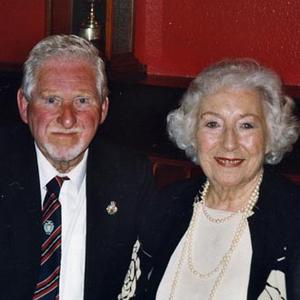
Ron Redman with Vera Lynn
Sue: You were with the Royal Hampshire Regiment and you found yourself at Tebourba Gap. You had been told that the Germans were retreating very fast, would you like to take up the story?
Ron: Well, that was on the ship coming over. We thought we were going to have an opposed landing but the French had capitulated and it was an easy landing. We were sent to a tented camp just outside Algiers and things were very peaceful. The weather was warm. Before we left England, we were issued with desert gear, shorts and everything and they were taken back on the ship when we realised that we weren’t going to need them. But it was warm, very warm and we landed in Algiers, as I say, and I remember seeing my kit-bag on the dock, amongst all the others, and I never saw it again. I always wonder… We were told to put everything personal into the bag; anything personal or private or a bit special, into the bag, and that was the last we saw of them.
In Algiers, we were given freedom to go into the town of Algiers. We were there for about a week, but the natives were a bit hostile. The French native cavalry — the Zuwars I think they used to call them — they used to rattle their sabres you might say. And we weren’t very welcome. After a few days we were to get into cattle trucks — that’s where the expression comes: quarante hommes ou huit cheveux — 40 men or 8 horses, which they seem to accept on the continent. We don’t, do we? But they accept it. The equivalent of one horse is 5 men. We had a very long stop and start journey towards Tunisia.
Sue: Did you have enough food, Ron? Did they feed you on the journey?
Ron: Yes. We had our tinned rations, they used to call them K rations. Incidentally I’m still on a charge. Coming over on the ship, the Bay of Biscay even the sailors were sick, everybody was very, very bad. It was an American ship with American food — lots of creamy stuff — and we were violently sick and until it got to the Mediterranean and it calmed down, we obviously wanted something. Somebody had told us that boiled sweets were the answer. Where do you get boiled sweets? We had our rations issued on the way and there was a tin of boiled sweets and my group said “Let’s open the tin”. We thought, well we’re going to use them anyway so Billy Muggins opens his tin and everybody had one or two. And they did the trick, you sucked one and the feeling of sea-sickness was gone.
When we landed, a young officer, straight from Sandhurst, had given out orders for all rations to be handed in, untouched. When he got them and he was counting them, he said “Somebody’s opened a tin of these sweets! Name the person!” Well somebody had to put their hand up so I did, thinking, well, it’s no crime. But he said: ”this is a very serious thing, you’ve opened a tin without permission. I’m afraid you’ll have to go on a charge”
And it got to the stage that Le Patourel, my Company Commander, put a table in front of the tent and had all the trimmings of a charge. And he said it was a serious matter, too serious for him to deal with, so I was remanded for CO’s orders, which is a very bad thing. But because we moved on, out of that, I think it was all forgotten.
Sue: That’s extraordinary! What would your punishment have been?
Ron: Good question! I don’t know what they would have done. They couldn’t say ‘confined to barracks’, could they? I don’t know. I was on that charge and I felt I was innocent, I felt I was just unlucky.
This story was submitted to the People's War site by Sue Craig on behalf of Ron Redman and has been added to the site with his permission. Ron fully understands the site's terms and conditions.
© Copyright of content contributed to this Archive rests with the author. Find out how you can use this.


 Recommended story
 Story with photo