Coronel and the Falklands
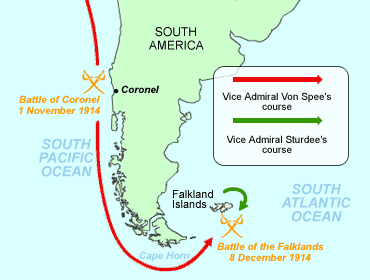
The Battles of Coronel and the Falklands The most powerful German squadron outside the North Sea in 1914 was the East Asiatic Squadron, led by the armoured cruisers Scharnhorst and Gneisenau under the command of Vice Admiral Graf von Spee. He tried to return home via South American waters, and was engaged on 1 November in the Pacific, off Coronel in Chile. His opponent was Rear Admiral Christopher Cradock, whose main force comprised two rather older and les well-armed armoured cruisers, Good Hope and Monmouth. Both British ships were sunk with all hands, an almost unheard of British defeat.
The battle cruisers Invincible and Inflexible were rushed south. They were taking coal on board in the Falklands when Spee walked into the trap by attacking the islands. Seeing warships in the harbour, and fired upon by the old battleship Canopus, which was defending Port Stanley, the Germans retreated with the British, led by Vice Admiral Sturdee, in pursuit.
Escape was impossible. British gunnery was not perfect, but the 12-in guns of the battle cruisers had overwhelming superiority in firepower. Scharnhorst sank with no survivors; 200 of Gneisenau's ship's company were saved when she went down. British cruisers also sank two of the three German light cruisers that were accompanying Spee's force. Only the light cruiser Dresden got away, and she was forced by British cruisers to scuttle in the following March. British honour was thus restored.