
Omer Bartov asks why, in the case of genocide, society finds it so difficult to point the finger at the perpetrators. Is it because we are all - to a greater or lesser degree - to blame?
By Omer Bartov
Last updated 2011-02-17
Omer Bartov asks why, in the case of genocide, society finds it so difficult to point the finger at the perpetrators. Is it because we are all - to a greater or lesser degree - to blame?
One of the most curious aspects of modern genocide is the difficulty of assigning guilt. As events that we know mean genocide come to light, we learn that millions have been tortured and killed. We also learn that many thousands have carried out the killing, that a smaller proportion of people have organised it, and that individuals in high office have ordered it - or sometimes that one person only has ordered it.
One of the most curious aspects of modern genocide is the difficulty of assigning guilt
Eventually, we also learn that endless multitudes of people were bystanders during that genocide. We discover that these people saw, heard, or knew about the mass killing being carried out 'in their name', but that they largely went about their own business. We find that a small minority perhaps tried to help or rescue the victims, but that the vast majority exercised what has come to be known as 'passivity' or 'indifference', but which is in fact an active choice to do nothing.
The situations described above apply in many cases of modern genocide, and the difficulty of assigning guilt in these cases can be gleaned from the tortuous process under way in the UN international criminal tribunal for the former Yugoslavia in The Hague and its equivalent for Rwanda, situated in Arusha.
However, the vast, bureaucratically organised and logistically complex genocide of the Jews - along with the murder of other alleged enemies of the Nazi regime that came to power in Germany in 1933 - remains a singular example of a modern genocide in which millions were killed yet very few could be charged with direct responsibility.
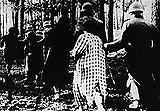 Polish women being led into the forest for execution, 1939 © To be sure, we know that Adolf Hitler was a fanatical anti-Semite who, having become leader of the Nazi party in 1933 decided, at some point in the autumn of 1941, to eradicate European Jewry. But in fact we have no direct order by him to that effect. Hence the endless debate on the timing of that decision and the manner of its dissemination.
They organised the thing, yet they killed no one
Some have suggested that the Holocaust began as an initiative by local SS officials faced with the 'logistical problem' of the Jews they had confined in ghettos, but did not want to feed. Others suggest that genocide grew out of the Führer's life-long obsession with the Jewish 'peril'. But neither theory can be said definitively to explain what led to genocide.
In a similar vein, we know that such men as Heinrich Himmler, Reinhard Heydrich and Adolf Eichmann, were closely involved in organising the genocide of the Jews. It was they who built up the murder squads and extermination camps, and negotiated with governments and police, as well as Jewish councils. It was they who struck agreements with industry to supply poison gas, build gas vans, and come up with ever more efficient gas chambers and crematoria.
But none of these individuals and organisations seems to have had any blood on their hands. They organised the thing, yet they killed no one. They were, in that sense, the paradigmatic Schreibtischtäter, the 'desk murderers' described by the writer and philosopher Hanna Arendt as embodying the 'banality of evil'.
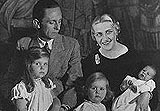 Joseph Goebbels with his family © So who did have blood on their hands? Perhaps the first place to look for the murderers is among the local commanders, perhaps one like Franz Stangl, commandant of the Sobibor and Treblinka extermination camps, who oversaw the gassing of about a million Jews. Unlike Eichmann or Himmler, who became physically sick when they observed the results of their labours, Stangl stuck it out.
It was also their existence that helped Stangl keep his hands clean and Höss at a safe distance from the crematoria.
Like Auschwitz commandant Rudolf Höss, Stangl tried to live a decent life with family, children, flowerbeds and pets, in the vicinity of his death factory. And he, like Höss, was exposed daily to the killing - indeed, he made heroic efforts to improve his camp's efficiency. However, again like Höss, he hardly ever killed anyone himself, and it took him years to have even the faintest notion of his responsibility for the deaths of thousands of innocent people. After all, he did everything to keep his camp in good order and to make the terrible job with which he had been charged as easy as possible for everyone concerned.
Extermination camps relied on a small staff of German SS men, a much larger contingent of collaborationist auxiliary guards, and teams of Jewish inmates temporarily kept alive so as to do the 'dirty work' of pushing the victims into the gas chambers, cleaning up after they had died, and disposing of the bodies. These unfortunate prisoners were the infamous Sonderkommandos, who were in many ways the epitome of the Nazi genocide.
Just as the Germans established Judenräte, or Jewish councils, to help them register the Jews and organise them for deportation to the camps throughout Europe, so they also used the Jews to facilitate their own mass murder down to the smallest details of cutting the victims' hair. That these wretched young men should not be confused with the actual perpetrators, can be seen from the fact that it was also they who staged the only recorded uprisings - hopeless though they were - in Birkenau, Sobibor and Treblinka. But it was also their existence that helped Stangl keep his hands clean and Höss at a safe distance from the crematoria.
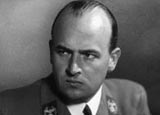 Hans Frank, governor of the General Government of Poland © So who can be blamed for the genocide? There were of course thousands of German men - soldiers, SS men, policemen - who took part in the killing in local communities throughout Europe, in Poland, Lithuania, Ukraine, and so forth, as well as in Germany. (Here it should be remembered that at least half of the total victims of the Holocaust were not gassed but were shot outright in or near their own towns and villages.) These German men, however, were not perpetrating genocide in the sense that we use it today.
It was the regular, rank and file, SS men and policemen, and not the people who made the decisions, who did the shooting
They were massacring communities, and putting masses of other people on trains, to be shipped to the extermination camps. But they may well not have known about a continent-wide genocide, and many would have been concerned only with local issues. Moreover, in these local communities, the middle and even low-ranking officers did very little of the killing, especially if they found it distasteful. It was the regular, rank and file, SS men and policemen, and not the people who made the decisions, who did the shooting.
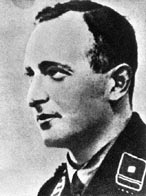 Adolf Eichmann © Another important thing to remember is that many of those who murdered were not German at all, but rather were local collaborators, often men who personally knew the people they were killing. For them, a very different logic operated, and genocide was not their aim.
They were making their own communities 'judenrein' ('free of Jews') - taking over Jewish homes and businesses, improving their own lot and their children's future prospects - by killing their own neighbours. Or, in other cases, companies of collaborators were brought in, sometimes made up of former Red Army soldiers taken out of German POW camps, where they were dying en masse. These men were made to kill Jews in places they had no knowledge of, without being told why - apart from the fact that if they did not kill they would be killed in turn.
The final irony of this genocide was the manner in which West German courts tried to deal with it after it was over, especially in the late 1950s and the 1960s. German law mandated that only individuals who could be shown to have personally murdered someone for what was described by the courts as 'base motives' such as sexual lust or sadism, could be charged with murder.
The result was that local commanders of remote SS and SD posts in eastern Europe, men who were known to have arranged the murder of tens of thousands of people, were acquitted if they could not be shown to have personally killed anyone. Only their subordinates - who were sometimes indeed sadistic types, but of no importance whatsoever in the organisation of genocide - were sent to jail.
That the judges and lawyers who debated such cases had mostly been active themselves in the Third Reich was obviously part of the irony.
That the judges and lawyers who debated such cases had mostly been active themselves in the Third Reich was obviously part of the irony. And the fact that the Jewish witnesses who testified at these trials were seen as rather suspect because their suffering must have undermined their objectivity, was perhaps the clearest indication of the main conclusion we can draw about modern genocide.
The conclusion is that those who organise genocide all too often get away with it, while those subjected to it can rarely expect to see justice done. This is a lesson that we need to take to heart as we contemplate contemporary cases of genocide, 'ethnic cleansing', and other crimes against humanity.
Genocide is a collective undertaking - those who order and organise it do not carry it out, those who do the killing claim ignorance of its scope, and emphasise their inability to disobey orders. In other words, unlike homicide, genocide is deeply rooted in the expectation of impunity. Everyone knows it is happening, but no one seems to be responsible, and no one is willing to intervene. This, to cite the most current example out of scores of others that have occurred since 1945, is what we can now see going on in Darfur.
Thus, when we ask, 'Who is guilty?' there is only one answer we can come up with, in view of our own willingness to allow such mass murder to go on. The answer is: 'We are.'
Books
Stay the Hand of Vengeance: The Politics of War Crimes Tribunals by Gary Jonathan Bass (Princeton University Press, 2000)
Genocide on Trial: War Crimes Trials and the Formation of Holocaust History and Memory by Donald Bloxham (Oxford University Press, 2001)
The Origins of the Final Solution: The Evolution of Nazi Jewish Policy, September 1939-March 1942 by Christopher R Browning with contributions by Jürgen Matthäus (Lincoln, University of Nebraska Press; Jerusalem, Yad Vashem; 2004)
The Memory of Judgment: Making Law and History in the Trials of the Holocaust by Lawrence Douglas (Yale University Press, 2001)
The Destruction of the European Jews by Raul Hilberg (Yale University Press, 2003)
Rudolph Höss, Death Dealer: The Memoirs of the SS Kommandant at Auschwitz edited by Steven Paskuly (Da Capo Press, 1996)
The Nuremberg War Crimes Trial, 1945-46: A Documentary Historyedited by Michael R Marrus (Boston, Bedford Books, 1997)
Hitler's Justice: The Courts of the Third Reich by Ingo Müller (Harvard University Press, 1991)
The Investigation of Nazi Crimes, 1945-1978: A Documentation by Adalbert Rückerl (Archon Books, 1980)
Into That Darkness: An Examination of Conscience by Gitta Sereny, (New York: Vintage Books, 1983, 1974)
The State of Israel vs. Adolf Eichmann by Hanna Yablonka, (New York: Schocken Books, 2004)
Auschwitz: The Nazis and the 'Final Solution' by Laurence Rees (BBC Books, 2005)
Omer Bartov is the John P Birkelund Distinguished Professor of European History at Brown University. His many books include Hitler's Army: Soldiers, Nazis, and War in the Third Reich (Oxford, 1991), Murder in Our Midst: The Holocaust, Industrial Killing, and Representation (Oxford, 1996) - which received the Fraenkel Prize in Contemporary History - Mirrors of Destruction: War, Genocide, and Modern Identity (Oxford, 2000), and Germany's War and the Holocaust: Disputed Histories (Cornell, 2003). His most recently published book is The 'Jew' in Cinema: From The Golem to Don't Touch My Holocaust (Indiana University Press, 2005).




BBC © 2014The BBC is not responsible for the content of external sites. Read more.
This page is best viewed in an up-to-date web browser with style sheets (CSS) enabled. While you will be able to view the content of this page in your current browser, you will not be able to get the full visual experience. Please consider upgrading your browser software or enabling style sheets (CSS) if you are able to do so.

