Impact of the Railways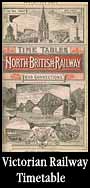 When Victoria came to the throne in 1837 very few railway lines had been opened in Scotland, and those which were operating were mainly for the benefit of industry, transporting coal and other raw materials between Glasgow, Dundee and Edinburgh. By the turn of the century, within one generation, nearly all of Scotland’s railways had been built, linking most major towns and many small villages, stretching from the Borders in the south to Thurso on north coast, and operating many lines which are shut and deemed unprofitable today. Journeys which had taken days prior to Victoria’s reign, when the fasted method of travel had been the horse-drawn carriage, were now completed in a matter of hours. The very earliest railways carried coal from mines to coastal harbours; these included the Tranent and Cockenzie Waggonway of 1772, which ran on wooden rails, and the Kilmarnock and Troon Railway of 1805. It wasn’t long before advances in engineering and the development of more efficient steam engines presented itself as an opportunity to the railway men of the early 19th century. In the 1842 the Edinburgh and Glasgow line opened and the popularity of the railways was becoming something of a sensation. A rivalry developed between two major companies, the Caledonian Company, which ran trains into Glasgow, and the North British Company which linked Edinburgh to Carlisle. The link to the English railway network opened in 1848. In an attempt to compete with the Caledonian Company’s dominance north of the River Tay, the North British Company made plans to open an east coast route by bridging both the Tay and the Forth. So started some of the biggest engineering projects in the world at the time. 
 | |  | The BBC is not responsible for the content of external Web sites. |
|








