|
Falkland Palace Factsheet
| | |
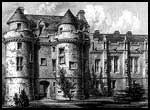 Falkland Palace in Fife was a retreat from the more formal business of court for the Stewarts. A royal hunting lodge, built in the latest style of a French Chateau, it was here that the Stewarts relaxed, indulging in their favourite pursuits of hunting and falconry, as well as sports such as football and golf. Falkland still has one of the few ‘real tennis’ courts left in Britain. Falkland Palace in Fife was a retreat from the more formal business of court for the Stewarts. A royal hunting lodge, built in the latest style of a French Chateau, it was here that the Stewarts relaxed, indulging in their favourite pursuits of hunting and falconry, as well as sports such as football and golf. Falkland still has one of the few ‘real tennis’ courts left in Britain.
- Inside the palace the royal chapel is about as close to a pre-Reformation chapel as exists now in Scotland, although it was restored in the 19th century.
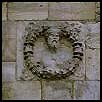
- The outer face of Falkland Palace is in a style described as 'Ecclesiastical Gothic', whereas the inner face (facing the courtyard) is in a Renaissance style. However, this architectural contrast was apparently part of James V's plan, and not the result of work from different periods. Pictured below is one of the Renaissance-stylised roundels from the courtyard.
- In 1528, King James V was held as a prisoner at Falkland by Archibald, 6th Earl of Douglas, until he escaped disguised as a groom.
 - On the 14th of December 1542, James V died at Falkland after the Scots defeat at the hands of the English in Battle of Solway Moss. James retired to his bedchamber, and is said to have died out of an apparent lack of a will to live. On his death the one week old Mary, Queen of Scots, was left as his sole heir.
- The palace was partially burnt down after Cromwell stayed there during his conquest of Scotland. Both Holyrood and Linlithgow Palaces suffered similar fates.
 | |  | The BBC is not responsible for the content of external Web sites. |
|
|