|
The Tomb of the Eagles - Isbister, Orkney Factsheet
|  | |
- The 5000 year old Isbister Tomb: containing the remains of over 338 people and, interestingly, the bones of white-tailed sea eagles.
Isbister is one of the most dramatic Neolithic discoveries of the 20th Century. It's a chambered tomb, like Maes Howe, and was originally covered by an oval cairn - until it was excavated that is. When it was opened, human skulls were found in small cells off the main chamber, which was a mass of mixed-up, human bones - sometimes placed in heaps with skull placed on top.
Tombs like Isbister weren't merely burial sites for dead individuals, they were important symbols of a tribe or community as a whole.
It wasn't important to be an individual when somebody died in Neolithic Orkney. The bones of all ages and sexes were mixed up together until they were indistinguishable: it seems that there was some kind of equality in death.
Ceremonies took place in the tomb - fires were lit, bones and other objects were burnt. Pottery and the bones of young animals were found, suggesting feasting in the tomb.
Why Eagles?
Neolithic communities in Orkney had a special affinity with certain animals: some with dogs, some with deer, or, like the community at Isbister, with white-tailed sea eagles. Many eagle bones and talons were found at Isbister - a totem of the people who lived there.
What 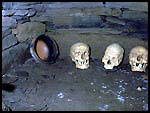 Story do the Bones Tell? Story do the Bones Tell?
Isbister was a very youthful community in modern terms. The average life expectancy was 20-25, with only 10% of the people found living beyond their twenties. Only a very few would live to be as old as 50, and their knowledge and experience must have been revered.
In general the community were only an inch shorter than the average height of people today. Also, many adults had developed bad backs.
  | | Media Museum |
 | |  | The BBC is not responsible for the content of external Web sites. |
|
|