
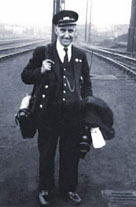
Finding out about your ancestor's profession adds a fascinating dimension to your research, and helps to place them in the context of their community and time.
By Dr Nick Barratt
Last updated 2011-06-09
Finding out about your ancestor's profession adds a fascinating dimension to your research, and helps to place them in the context of their community and time.
One of the most important parts of your research will be to investigate what your ancestors did for a living. The basic sources you will have used to build your family tree - certificates of birth, marriage and death, census returns, wills and parish registers - are full of clues relating to occupation.
These can be used to search for related information in other archives, museums and libraries and will allow you to build up a picture of what life was like, placing your ancestors in their proper historical context.
Before the Industrial Revolution, most of our ancestors worked on the land, with the majority finding seasonal employment as 'agricultural labourers' - the 'ag labs' listed on countless census returns.
The rural sector was the predominant driving force of Britain's economy right up to the 19th century. Initially, the wool trade provided the greatest source of revenue for farmers throughout the medieval and early modern period, although of course arable farming was essential to feed the population.
At the top of the pyramid were the land-owning farmers, who consolidated their land from the Tudor period onwards via 'enclosures'. These covered a whole range of alterations to the way land was held and farmed. Enclosure awards are a good way of tracing relatives who owned large tracts of land, as indeed are Tithe Apportionments (1840s), the Valuation Office survey (1910s) and the National Farm Survey (1943).
The seasonal workers tend not to leave many traces in records, other than census returns, unless they were unable to find work and ended up in the workhouse.
You might find mention of smaller tenant farmers in estate records, manorial documents and land tax records. Once the Industrial Revolution took hold in the early to mid-19th century, people began to leave the land in great numbers and found employment in the cities.
You often find records in county archives reflecting this drift from countryside to towns, such as documents relating to official schemes to move the rural poor into cities.
In contrast to the agricultural sector, British industry had tended to be small-scale and localised before the onset of mass-production, factories, fast communication links and worldwide trade that marked the Industrial Revolution of the late 18th century onwards.
Probably the largest nationwide 'industry' prior to the emergence of cotton factories was brick-making, with many communities having their own local brickworks which provided employment on a larger scale than most trades.
Regional craft and trade guilds tended to promote excellence in a particular field among sole traders.
With the onset of mechanised spinning, factories with multi-loom capacity started to spring up across the country, particularly in the North West where imported cotton from America dominated.
Many of our ancestors would have left their traditional rural communities to find work in the emerging factory towns. Similarly, the drive to new technology meant that iron and steel factories were opening to meet demand driven by the growing railway network and steam ships that were the lifeblood of Britain's burgeoning external trade.
Mining also underwent a dramatic increase, with entire communities in the Midlands, Kent and North East springing up around the pits. Many of the mines and factories have long since closed, but you may find records, photographs and staff ledgers in local archives and museums.
You can visit specialist museums to get a sense of the conditions under which our ancestors would have worked.
It would be doing a great disservice to everyone who has earned a living from the sea to solely concentrate on Britain's industrial heritage. Alongside the Royal Navy there has always been a flourishing merchant navy, covering everything from fishing fleets to ferries and foreign steamers.
Records of the men and women who served on board these ships do survive, though they are skewed towards the masters and mates who were required to obtain a certificate of competency before taking charge of a vessel. These records, together with surviving tickets for merchant seamen, are at the National Archives, Kew, along with many crew lists and agreements.
Later records from the 20th century survive in far greater numbers and provide significant detail of an ancestor's career at sea.
In addition to sailors, many people found employment in one of the support services, serving as lifeguards, working in the docks or shipyards, or as customs and excise officers responsible for the prevention of smuggling, among other duties.
These are areas that can also be researched in official records housed in local archives as well as at the National Archives (TNA). Have a look at TNA's website to see which collections of records are online before you make your trip.
Dr Nick Barratt worked at the Public Record Office (now The National Archives, or TNA) from 1996 to 2000, with the family history team. He has given many talks on family history, and has written frequently for the TNA's genealogy journal, Ancestors. He has worked for the BBC as a specialist researcher on programmes such as 'One Foot in the Past','The People Detective' and 'Who Do You Think you Are?'.

BBC © 2014The BBC is not responsible for the content of external sites. Read more.
This page is best viewed in an up-to-date web browser with style sheets (CSS) enabled. While you will be able to view the content of this page in your current browser, you will not be able to get the full visual experience. Please consider upgrading your browser software or enabling style sheets (CSS) if you are able to do so.

