
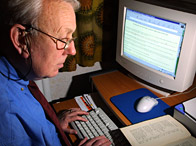
There is an overwhelming number of pay-for services on the internet that can help with your research but what should you look for when choosing which to use?
By Jenny Thomas
Last updated 2011-04-26
There is an overwhelming number of pay-for services on the internet that can help with your research but what should you look for when choosing which to use?
Keen to start your family tree, you type the name of an ancestor into a search engine, and literally hundreds of websites come back at you. Some are free, some pay-per-view, some subscription - and suddenly you don't know where to begin.
Databases and search engines make information accessible in a way in which it wasn't before: searches now take only a few minutes.
There is an overwhelming amount of information on the internet, and it's difficult to know which of the pay-for services are of value to you. It is fair to say that most genealogy sites for which you have to pay have some worth - it just depends whether they are going to be worthwhile for you. Here are some tips and guidelines to help make order out of the chaos so you can make the right choice when it comes to selecting your website.
The bottom line in genealogical research is that you are going to have to pay for it. You cannot manage without the basic building blocks of certificates and census returns, and money can be liberally spent in travelling to archives, paying online fees, hiring private researchers and whatever else you deem necessary as you continue your research. But there are good reasons why more and more genealogists are going online.
There is a wealth of material available on the web, and it is being added to every day. Databases and search engines make information accessible in a way in which it wasn't before: searches that used to take weeks or months now take only a few minutes. And sometimes it's cheaper and easier to do what you can online and in your own time than travelling to archives and bowing to time pressure there. You may find that you can use online resources for free or more cheaply at archives, but is it worth the time and expense of travelling there? And you will still have to pay for the photocopying!
First of all, there are lots of excellent free resources used by genealogists - here is a small selection:
But none of these is guaranteed to hold all the records that you want. So, to start from the very beginning, which sites do you absolutely need in order to build your family tree, and how can you tell where to put your money?
There are some basic things that you might look out for when choosing your first genealogical websites:
Can you find details of all the records held, how they were created and how researchers can use them?
- Does it contain the basic resources of genealogy - in other words, birth, marriage and death certificates (or indexes to the certificates) and census returns? You're not going to be able to do your genealogy without them.
- Is there a full explanation of what else is in the site? Can you find details of all the records held, how they were created and how researchers can use them? Without this information, you might just end up groping in the dark.
- Can you access original documents (digitised) or just transcripts? It is always better seeing the original document in digitised form that what someone else has copied (or miscopied) from it. Some sites just give indexes and you order copies of the original document from there, according to what you find - that's fine because you can see the information for yourself when your document arrives.
- Are you happy with the way you will be charged? If you like to look at everything on a site, it is better to have a subscription that lasts for a certain period of time, during which you may look at whatever you like as many times as you please. If you simply want two or three records, and you have the option, you might be better off paying only for what you view.
Here are some examples of pay-for sites for basic genealogy:
Hint: Often there is a free trial period for subscription sites so you can decide if it really is for you.
Hint: Often when you look at a record on a subscription site, you can return to it for free for a period of time - but make sure you get a print out of the searches you have done, along with the results.
When you have done your basic genealogy and built a skeleton family tree, it is time to investigate more specialised websites, for example, those containing military or employment records, parish records or wills. But you will need some basic information to make best use of what they have on offer: there is no point in paying to look for details of your great grandfather's military career if you don't know his full name, date of birth and the force in which he served. Without this kind of background information, you will have trouble identifying your ancestor among the thousands of others. In other words, you need to use genealogical sites in the right order to ensure that you get the most out of them.
From the description accompanying the site, you need to be sure of what you've searched.
Here are some features shared by many of the excellent sites - and some questions that you might like to ask:
- Does the site (or may it) contain information relevant to your ancestor? If your grandfather was a merchant seaman, for example, does this site contain seamen's records for the period during which he served?
- Is there a full description of the records that are held on the site? You shouldn't have to pay to find out whether or not you want to use a website, so it is a great help if there is an explanation of what records are available, what you need to know to identify your ancestor and what more you can hope to learn about them from the records you might find. From the description accompanying the site, you need to be sure of what you've searched - or eliminated - by using the site.
- Are there examples - ideally digitised images - of the type of records you may find? These can be very useful in understanding and interpreting whatever material you find relating to you ancestor.
- Is there a contact name or address for someone behind the site whom you can contact with any queries, or if you want to find out more?
Here are some examples of pay-for sites used by genealogists researching specialist information:
Of course, sometimes you won't find what you're looking for online; it's the same when you go to an archive. And not all resources are available on the web, so your path may inevitably lead to an archive in the end. But the web is a good place to get started. Don't forget to search for sites that tap into your area of genealogical interest!
There are websites of all descriptions, shapes and sizes that cater for genealogists, from databases to message forums, general information, help and support sites, family tree display tools - the list is endless. But unless you are after some specific information obtained from a historical record, you shouldn't really have to pay for these sites. Some of the most popular features are included on subscription sites anyway. If you are in need of a piece of advice, or wondering where you can find your next piece of information, have a look at the following free sites:
You can use these sites to make contact with the genealogy community.
You can use these sites to make contact with the genealogy community, and see if other researchers recommend the sites that you have to pay for.
For more detail about the resources available and how to use them, have a look at:
Books
The Genealogist's Internet by Peter Christian (The National Archives, 2003)
Track Down Your Ancestors: How to Research Your Family History Using Archives and the Internet by Estelle Catlett (2010)
Tracing Your Family History on the Internet by Chris Paton (Pen and Sword, 2011)
Jenny Thomas has worked on seven series of 'Who Do You Think You Are?' and researched and advised on numerous other television projects. She is the co-author of Genealogy Online for Dummies and is a frequent contributor to family history magazines. She has appeared as a genealogist on television, radio and in the national press, and works as a media and private researcher, a writer and a lecturer.

BBC © 2014The BBC is not responsible for the content of external sites. Read more.
This page is best viewed in an up-to-date web browser with style sheets (CSS) enabled. While you will be able to view the content of this page in your current browser, you will not be able to get the full visual experience. Please consider upgrading your browser software or enabling style sheets (CSS) if you are able to do so.

