
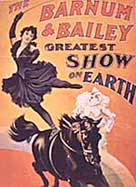
Sex, drugs and hedonism, a summer weekend for today's twenty-somethings or the average Victorian weekend? Matthew Sweet investigates.
By Matthew Sweet
Last updated 2011-02-17
Sex, drugs and hedonism, a summer weekend for today's twenty-somethings or the average Victorian weekend? Matthew Sweet investigates.
You've seen it in a hundred costume dramas. A group of Victorians sitting around the piano. Men in dinner suits, women twitching fans, the daughter of the household bashing out a Mendelsohn standard, polite applause muffled by white kid gloves, and another round of constipated dialogue.
...it's hard to think of a public pleasure with which they did not engage with intense, breathless enthusiasm.
If only somebody had thought to check the entertainment listings on the front page of The Times. Instead of suffering this well-mannered torture, they could have telegraphed the Cremorne Gardens and booked a table near the bandstand, scored a few strikes at the American bowling alley, taken in one of the shows or concerts, guzzled down a curry, danced until four in the morning, smoked a few opium-laced cigarettes, then returned home on the tube to negotiate their inevitable hangovers.
The processes of industrialisation partially account for the scope of these activities. During the reign of Queen Victoria, Britain was transformed from a largely agrarian society to one in which the majority of the population lived in cities. Those who relocated to these growing urban environments could no longer, as their parents and grandparents had done, pursue activities based around the rhythms of village life. Moreover, industrial jobs offered a precise delineation of work and leisure time that had never existed in the past. The Victorians were the first people to have statutory holidays and proscribed days off. The burgeoning entertainment industry was only too eager to help them fill that leisure time with recreational pleasures, enticing them into theme parks, shopping malls, amusement arcades and theatres.
There's a huge disjunction between the received image of nineteenth-century recreation, and the dizzying extent of the pleasures that were available to ordinary Victorians. 'Outside amusements were few,' insists one standard history textbook, 'hence the frequency with which the piano figured in the home.' Nothing could be further from the truth. The lives of Victorians were anything but staid and dull. Indeed, it's hard to think of a public pleasure with which they did not engage with intense, breathless enthusiasm.
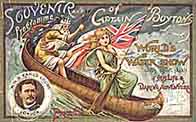 Cover of souvenir programme for Captain Boyton's World's Water Show, Earls Court, 1893 © They invented the modern holiday - in both its seaside and foreign package form - and were enthusiastic patrons of Thomas Cook. They were mad for celebrity gossip and sensational stories in scandal sheets such as The News of the World - which launched in 1843 with the horrifying tale of a female pharmacist who was raped and then hurled into the Thames. They devoured sensational novels and stories whose plots revolved around bigamy, murder, adultery and poisoning - and so did their children, who followed weekly serials such as The Boy Detective (1866), the stirring adventures of a crime fighting teen transvestite.
They were great consumers of recreational drugs, purchased at Boots and knocked back in suburban living rooms...
They flocked to spectacular stage shows featuring high-tech special effects: burning buildings licked by real flames, collapsing bridges, thunderous avalanches, simulated waterfalls and Derby races featuring real horses. They relished death-defying acrobatic displays, and were thrilled when performers such as Blondin, who had gained fame by crossing the Niagara Falls on a tightrope, entertained them by pushing a lion in a wheelbarrow across a rope suspended a hundred feet in the air, then repeating the trick in a suit of armour. They adored moving pictures - whether they were supplied by the zoopraxiscope, the choreutoscope, the panorama, or the cinematograph. They loved Indian cookery, fish and chips, and cranberry juice, and imported frozen food from America when supplies ran low at home.
They were great consumers of recreational drugs, purchased at Boots and knocked back in suburban living rooms all over the country. Most popular was laudanum - a cocktail of opium and alcohol, which is still manufactured for medical use today. This substance wasn't just the tipple of a clique of artsy dopeheads, as it had been in the time of Samuel Taylor Coleridge and Thomas De Quincey (although Wilkie Collins, Elizabeth Barrett Browning, William Gladstone, Jane Carlyle and Florence Nightingale all glugged it back with enthusiasm). Opium was the People's Intoxicant, more freely available in the 19th century than packets of Lambert and Butler are today. The anti-drug laws by which our society is regulated appeared during the First World War, when the government became nervous that the packets of heroin gel that women were buying from Harrods to send to their sweethearts at the Western Front were having detrimental effects upon discipline.
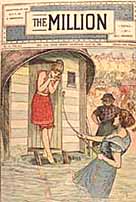 Seaside bathing, 1893 © More healthily, perhaps, organised team sports achieved a new primacy. Large numbers of Britons learned to swim: a rare talent before the mid-nineteenth-century. The first international cricket match was played in 1868 between British players and an Australian side entirely composed of Aborigines. The Football League was founded in 1888, and had soon generated its own star system, which included figures such as Arthur Wharton, Britain's first black professional footballer, who kept goal for Preston North End and Rotherham, and also found time to break the 100 yards world record, and play professional cricket for Yorkshire and Lancashire.
...pornography was produced in a volume capable of satisfying a mass readership.
For the first time, pornography was produced in a volume capable of satisfying a mass readership. Oddly, the industry was founded by a gang of political radicals who used sales of erotica to subsidise their campaigning and pamphleteering: when, in the 1840s, the widely-anticipated British revolution failed to materialise, these booksellers and printers found that their former sideline had become too profitable to relinquish. Lubricious stories such as Lady Pokingham, or, They All Do it (1881), and hardcore daguerreotypes, photographs and magic lantern slides, demonstrate the omnivorous nature of Victorian sexuality. Don't imagine that this material comprised tame pictures of gartered ladies standing in front of cheese plants; any permutation or peccadillo you can conceive is represented in the work that has survived from the period. And it was produced in huge quantities: in 1874, the Pimlico studio of Henry Hayler, one of the most prominent producers of such material was loaded up with 130,248 obscene photographs and five thousand magic lantern slides - which gives some idea of the extent of its appeal.
Photographic technologies also facilitated the development of a recognisably modern notion of celebrity. In 1860, the royal family began to issue portraits, shot in the same casual style familiar from the pages of Hello! magazine. Politicians, writers and actors acquainted the public with their faces in the same way, doling out publicity photographs to admirers. More unusual personalities disseminated their images in the same way: Chang Woo Gow, the Chinese Giant, who made the first of several visits to Britain in 1886, before he, his Liverpool-born wife, and their two sons Edward and Ernest retired to Southcote Road, Bournemouth, from which they ran a teashop and Oriental bazaar; Charles Stratton, a dwarf celebrated across the world as General Tom Thumb; Chang and Eng, the original Siamese Twins.
In 1860, the royal family began to issue portraits, shot in the same casual style familiar from the pages of Hello! magazine.
The presence of these entertainers is now often invoked as a symptom of some cruel malaise in Victorian culture: the exhibition of human oddities, so the argument goes, is as a barbarism from which we have escaped. Such an assumption only patronises the dead. Most of these people were not cringing victims: they were stars. Charles Stratton ended his days in Bridgeport, Connecticut, the owner of a yacht and several racehorses: his lofty tomb in the Mountain Grove Cemetery is evidence of a financially profitable life. Chang and Eng retired to a farm in North Carolina, as did Millie-Christine, another pair of conjoined celebrities. (Strikingly, both sets of twins owned slaves.) Commodore Nutt, a popular dwarf performer, was hailed as 'the thirty-thousand dollar Nutt', thanks to his three-year contract bearing that figure. We call these exhibitions 'freak shows' - a term which the Victorians would not, on the whole, have used - and imagine that their personnel were victims exploited by whip-happy showmen. At its best, however, the exhibition of prodigies - as the Victorians preferred to call them - was a highly professionalised industry, which payed taxes, issued invoices, and made marketing plans. It is not often remembered that Joseph Merrick, the Elephant Man, was on a fifty-fifty box-office split with his manager, a percentage at which no modern showbiz performer would sniff.
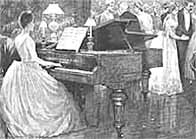 'Outside amusements were few,' insists one standard history textbook, 'hence the frequency with which the piano figured in the home.' Nothing could be further from the truth. © Although the makers of costume drama prefer to depict the Victorians enduring listless evenings around the piano, nineteenth-century culture is best characterised by the breathless pursuit of pleasure. As yet, nobody has shouted loudly enough about this aspect of the period to remedy the Victorians' long-term image-problem: the reputation for being dull and disingenuous with which they have been burdened for around eighty years.
...nineteenth-century culture is best characterised by the breathless pursuit of pleasure.
It is an impression perpetuated by Queen Victoria's fame for declaring her imperviousness to amusement. There's no reliable evidence that she ever said anything of the kind: those last few survivors of the period who remember meeting her speak of a woman of grins and giggles - despite her long depression after the death of Prince Albert. Look at the few extant photographs of Victoria chuckling like a weasel, and the humourless matriarch of popular mythology fades from consciousness.
Study the myriad pleasures offered by nineteenth-century popular culture, and similar misconceptions about her subjects also begin to shift and alter, propelling the Victorians out of the drawing room, and into the streets and parks, into the dancing saloons and music halls, hungry for the new pleasures which urbanisation had brought.
Books
Recreation and the Sea edited by S Fisher (University of Exeter Press, 1997)
Unrespectable Recreations edited by M Hewitt (Leeds Centre for Victorian Studies, 2001)
The British Seaside: Holidays and Resorts in the Twentieth Century by J K Walton (Manchester University Press, 2000)
Leisure in Britain 1780-1939 edited by J K Walton and J Walvin (Manchester University Press, 1983)
The First Black Footballer - Arthur Wharton 1865 - 1930 - An Absence of Memory by Phil Vasili (Frank Cass Publishers, 1998)
Blackpool Blackpool's pleasure beach was a popular seaside resort during the Victorian era. The north pier was started in 1862, the Winter Gardens were opened in 1878 and Blackpool Tower was built in 1894.
The Victoria & Albert MuseumThe world's largest museum of the decorative arts, containing national collections of sculpture, furniture, fashion and photographs.
Marylebone Cricket Club Museum at LordsAn account of how the game of cricket has evolved over the years using a collection of paintings, bats, blazers and the famous Ashes urn to tell the story.
Matthew Sweet has been film critic of The Independent on Sunday, a columnist for The Big Issue, and a director's assistant at the RSC. He is the author of Inventing the Victorians (Faber and Faber, 2001).




BBC © 2014The BBC is not responsible for the content of external sites. Read more.
This page is best viewed in an up-to-date web browser with style sheets (CSS) enabled. While you will be able to view the content of this page in your current browser, you will not be able to get the full visual experience. Please consider upgrading your browser software or enabling style sheets (CSS) if you are able to do so.

