Elizabethan
The banqueting course
'Sugar, spice and everything nice ...'
The exhortation to 'eat, drink and be merry' epitomised Christmas in Elizabethan England. A highlight of the season was the Christmas feast, which, in those households that could afford it, culminated in a 'banqueting course' of sweet and colourful delicacies.
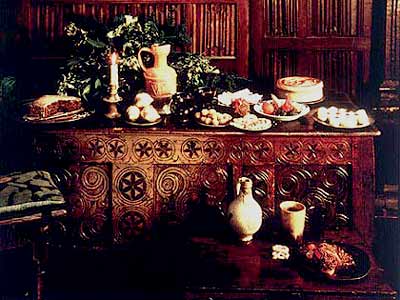
A banquet, or sweetmeat, course allowed the host to display his wealth and status. It also provided its creator, often the lady of the house, an opportunity to show her culinary and artistic skills. Sugar, very expensive at the time and considered to have medicinal properties, was the key ingredient of most of the elaborate dishes.
They were prepared and displayed to dazzle the guests with their beauty, delicacy and wit. The latter was provided by the creation of whimsical foods designed to deceive the eye. 'Collops of bacon', made from ground almonds and sugar, were a great favourite, as were walnuts, eggs and other items made from sugar-plate, a substance of egg, sugar and gelatine which could be moulded successfully into almost any form the cook might conceive. Another popular sweetmeat was 'leech', a milk-based sweet made with sugar and rosewater, which was cut into cubes and served plain or gilded, arranged as a chequerboard.
Spectacle was of great importance, with pride of place going to a marchpane - a round piece of almond paste which was iced and elaborately decorated, sometimes with figures made of sugar. Crystallised fruits added colour. Gold leaf was used to gild lemons and other fruits and also gingerbread, which added to the rich and splendid appearance of the banquet.
All of this would be accompanied by hot drinks, including 'lambswool'. This was made from hot cider, sherry or ale, spices and apples, which when hot exploded, to create a white 'woolly' top. Spiced wines and syllabubs were also popular. Guests were flattered and impressed by such extravagant expenditure.