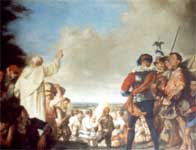
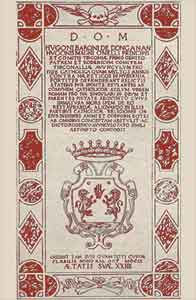
On 4th September 1607, the Earls of Tyrone and Tyrconnell, along with a close circle of family and associates, boarded a ship at Rathmullan on Lough Swilly, bound for Spain. This event has become known as ‘The Flight of the Earls’ and is widely regarded as one of the most enigmatic events in Irish history, virtually defying explanation. Even the designation of the Earls’ departure as a ‘flight’ has been contested, though the fact that the Earls left in such a hurry that the Earl of Tyrone’s young son, Con, was left behind, while the Earl of Tyrconnell departed without his pregnant young wife, should dispel lingering doubts in this regard. Symptomatic once again of the intrigue that swirled around the flight both at the time and ever since is the continuing fascination with the identities of the ‘noble shipload’ of 99 people that departed Lough Swilly, the so-called cream of Gaelic society. Many attempts have been made to resolve this ‘mystery’, though they have all been in vain, not least, as it turns out, because the ship was not so jam-packed with the Gaelic nobility of Ulster after all. Some 60 people on board may be accounted for as the crew who had travelled from the continent. Why the northern Earls took flight has also been a matter of considerable debate, leading to accusations by hostile commentators that the Earls were up to their necks in treason while their apologists portray them as offended innocents, badgered into departing their homeland in fear of their lives. As often happens in such circumstances, it emerges that the Earls were as much sinned against as sinning. Crown officials in Ireland in the wake of The Nine Years' War (1594-1603), led by the Lord Deputy, Sir Arthur Chichester, maintained a vendetta against the northern Earls after the conflict ended with the Treaty of Mellifont, 1603. Having lost his brother during the war, Chichester had additional personal reasons for despising the northern Earls. Not surprisingly, as a result, there is evidence that the crown authorities in Ireland resorted to provocative tactics, not the least of which turned out to be a campaign of religious persecution. As the self-proclaimed champion of Catholicism in Ireland, the Earl of Tyrone became involved in renewed conspiratorial machinations with a view to overthrowing the Protestant administration in Dublin. Their anger fuelled by resentment at the manner in which the royal authorities in Ireland were mounting legal challenges to their territories, the northern Earls became ever deeper embroiled in treason, seeking and ultimately obtaining a Spanish pension in return for treasonable promises. Fearing that they had been compromised by the information of an informer (who turned out to be Lord Howth), the Earls were advised by influential contacts on the continent that their lives were in danger and that a ship would be sent to convey them to safety. Thus the Earls departed Rathmullan, though they never reached Spain. Stormy weather resulted in landfall being made in France. The diplomatic furore which followed instigated a major international crisis involving the English, French and Spanish governments. The French government rejected calls for their extradition, whereas the Earls’ allies during The Nine Years' War, the Spanish, were anxious to avoid causing offence to England in the wake of the Anglo-Spanish peace treaty of 1604. As a compromise the Earls ended up dwelling in Rome where they ended their days.
 Printable version Printable version
|