Embroidering the truth
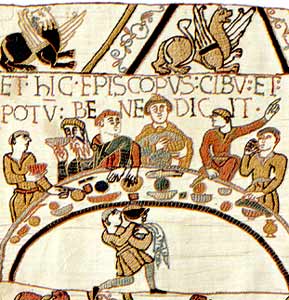
The tapestry was commissioned by William the Conqueror's half-brother, Bishop Odo of Bayeux, depicting the events surrounding the conquest. It details events leading up to the invasion and shows the key aspects of the conquest itself, not least the Battle of Hastings.
The tapestry is not a tapestry in the normal sense. It is actually an embroidery of at least eight coloured wools, worked into pieces of linen. It is divided into a series of connected panels, approximately half a metre wide and 70 metres long. It is probably incomplete.
If we're reasonably sure that it was commissioned by Odo, there is greater fuzziness over its designer and manufacturers. It is thought likely to have been created by English embroiderers, probably in the then famous embroidery works of Winchester; though some French historians maintain it was made in Normandy. Even the name is disagreed over, depending on which country you are in: to the French it is La Tapisserie de la reine Mathilde, or Queen Matilda's Tapestry (Matilda was the Conqueror's wife).