Canals
The Bridgewater Canal was built by James Brindley for the Duke of Bridgewater to transport coal the ten miles from his Worsley mines to Manchester. The canal was completed in 1761, halving the cost of coal in Manchester. In 1776 it was extended by 30 miles from Manchester to Liverpool.
James Brindley was the self-taught engineer who built the Bridgewater canal. Its success prompted demand for his skill on many other canals, and was ultimately responsible for a network of canals totalling some 360 miles. Brindley built without written calculations or drawings, leaving no records except the works themselves.
The Bridgewater Canal started the era of British canals. It established a network of inland waterways serving the Industrial Revolution and contributing to Britain's prosperity in the half century before the railway era, which began in the 1850s. New technology saw the introduction of locks, inclined planes and lifts to cope with changes in water level.
New canal technology saw a lock staircase built at Bingley, on the Leeds and Liverpool Canal. At Ketley in Shropshire, inclined planes hauled tugboats from one level to another. Vertical lifts counterweighted by water were used on the Grand Western Canal and another, in Cheshire, was later converted to electricity.
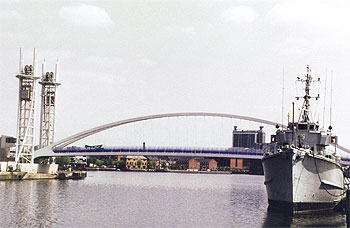
The Manchester, Bolton and Bury Canal (pictured) cost over £120,000 and was used mainly to carry coal from the collieries to fuel the local mills and factories. The canal is 15 miles long with a rise of 187 feet between Manchester, Bolton and Bury. It has 17 locks and six aqueducts.
During the construction of the Manchester, Bolton and Bury Canal a decision was made to link it up with the Leeds and Liverpool canal. This required the canal to be broad, rather than narrow, so some of the locks had to be taken down and rebuilt. The link was never built.
The Leeds and Liverpool Canal is Britain's longest at over 127 miles. In 1777 the canal was opened in parts, but lack of money stopped construction until 1790, by which time trade around Blackburn and Burnley had soared. The route was altered, ironically to the route originally suggested by the Liverpool merchants.
The first canal was built in the 7th century BC by the Assyrian king Sennacherib. The 50-mile stone-lined canal, which was 20 metres wide, brought fresh water from Bavian to Nineveh. It included a stone aqueduct and a dam with sluice gates allowing regulation of the flow of water.