
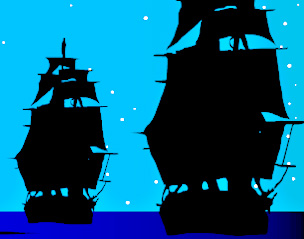
Chart the course of maritime navigation from the days of rough reckoning to the ground-breaking technological advances of the late 1700s.
Chart the course of maritime navigation from the days of rough reckoning to the ground-breaking technological advances of the late 1700s.
The greatest pioneer of this navigation revolution was Captain James Cook who navigated the vastness of the Pacific thanks to the technical genius of John Harrison. In 1759, Harrison devised the first ever clock to keep the time exactly - in any variation of climate.
Thanks to the Harrison's clock keeping exact Greenwich Mean Time, sailors could then determine how many hours they were before or after that time and thus able to determine their longitude (degrees East to West position) on the globe.
Images: The Navigation Animation features images reproduced courtesy of the National Maritime Museum.
Historical consultant: Graham Dolan of the National Maritime Museum.




BBC © 2014The BBC is not responsible for the content of external sites. Read more.
This page is best viewed in an up-to-date web browser with style sheets (CSS) enabled. While you will be able to view the content of this page in your current browser, you will not be able to get the full visual experience. Please consider upgrading your browser software or enabling style sheets (CSS) if you are able to do so.

