Medicine
Diary extract
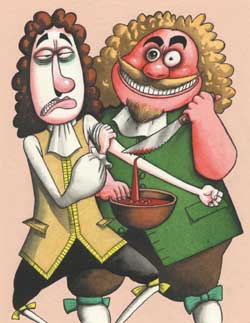
4th May 1662 '...Mr Holliard came to me and let me blood, about 16 ounces, I being exceedingly full of blood, and very good. I begun to be sick; but lying upon my back, I was presently well again and did give him 5s for his pains; and so we parted.'
Background information
Blood-letting had been recommended for centuries. According to the ancient Greeks, there were four 'humours' - blood, choler, and two sorts of bile - which needed to be balanced against each other. Blood-letting dealt with the first. The others might call for enemas, laxatives, and pills made of rare items such as the saliva of a fasting man and the moss that grows on an unburied skull, as well as commonplace snails and woodlice. Fashionable physicians could advise, apothecaries could dispense, surgeons could deal with minor ailments, the local wise woman might help, but they all cost money. Magic might work better, Samuel Pepys attributed his good health to wearing a hare's foot around his neck.
For the poor, there were hospitals. St Bartholomew's in Smithfield and St Thomas's south of the river provided basic care, mostly limited to rest and food. The state of medical knowledge was still primitive. There was no antisepsis, no anaesthetic except drink and opium, and little knowledge of human physiology. The only surgical intervention was to remove bladder stones, a painful and common complaint. Samuel Pepys was operated on in 1658, and celebrated his survival every year.