
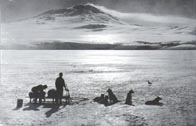
What was the secret of Amundsen's success at the South Pole? As Sian Flynn explains, the devil's in the detail.
By Sian Flynn
Last updated 2011-03-03
What was the secret of Amundsen's success at the South Pole? As Sian Flynn explains, the devil's in the detail.
In 1911, Captain Robert Falcon Scott and Captain Roald Amundsen set off from their respective base camps on the Antarctic coast, each trying to reach the South Pole first. Amundsen reached it on 15 December 1911 (the date is sometimes given as 14 December - the difference being due to differing interpretations of the international date line) and returned to civilisation within three months. Scott and his four men arrived at the Pole 33 days later, on 17 January 1912, and faced an agonising struggle to get back to base camp. They all perished. Exactly why Amundsen's team completed the return journey with comparative ease and Scott's party died has been the source of fierce debate ever since.
Getting the smallest details right or wrong can be the difference between life and death...
Despite Scott and Amundsen's shared aim to reach the Pole first, they differed in how they organised their expeditions. From the type of men they chose to the food and equipment they took, the differences were marked. In the extreme and hostile conditions of the Antarctic, getting the smallest details right or wrong can mean the difference between life and death.
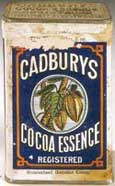 Cadbury's cocoa powder, taken by Amundsen's Fram expedition © To begin with, Scott's agenda was more diverse. He planned to continue his vast programme of scientific work, following on from the tasks undertaken on his Discovery expedition (1901-4), as well as wanting to reach the Pole. Amundsen, on the other hand, did not even take any scientists and had relatively limited interest in major scientific achievement. His childhood desire was to be the first man at the North Pole, but when it was claimed in 1909, he was determined to be the first at the South Pole instead. He wrote in his journal:
'...my plans made the Pole the first objective.'
This competitive focus enabled Amundsen to spend all his energy and funds on the journey south.
Scott and Amundsen represented two very different nations and this inevitably influenced how their expeditions were organised, as well as their expectations of achievement. Scott was appointed to lead two official British expeditions to the Antarctic and always planned his voyages in the gaze of an inquisitive media. Due to Britain's world standing, it was naturally assumed that an Englishman would reach the Pole first.
In contrast, Norway was a relatively new nation in Amundsen's day, having only achieved its independence from Sweden in 1905. Amundsen was taking a massive gamble in his quest to reach the Pole first. One of the reasons why he planned his Antarctic expedition secretly was because Norway needed diplomatic support from Britain. He saw the political sensitivity in pitching himself against the English explorer and feared people would try to stop him if he made his plans public. Pride and an independent nature also contributed to Amundsen's pretence of continuing with his plans to journey to the Arctic.
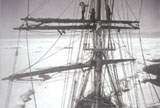 Tryggve Gran, T Griffith (geologist) and Charles Wright (physicist), aboard the 'Terra Nova', 22 December 1910 © Scott's Terra Nova expedition was large compared to Amundsen's hand-picked party. Over 60 men manned the British ship and 25 men comprised the shore party, who would winter at base camp. Amundsen picked 19 men for his Fram expedition but only nine wintered at Framheim (meaning 'home of the Fram'), the hut they built on the ice shelf. Scott had yet to pick his Polar team from the shore party and, in fact, did not settle the matter until he was about 240km (150 miles) from the Pole.
Oates was candid in his criticism of Scott...
Amundsen planned for eight of the men to go to the Pole, with the Swedish cook, Adolf Lindstrøm, remaining at Framheim. The only man he feared in his party was Hjalmar Johansen, a famous Arctic explorer in his own right. When Amundsen set off too early in September 1911, the party was forced to return to the hut, and Johansen was appalled by the disarray and publicly chastised Amundsen. He was dropped with two others from the polar party - Amundsen would not tolerate people who criticised his leadership. In contrast, Scott included Captain Oates in his Polar party (as a representative of the army), despite the fact that the two men clashed. In letters home to his mother, Oates was candid in his criticism of Scott and this conflict was yet another strain on Scott's leadership.
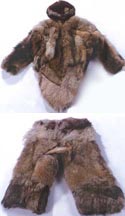 Inuit-style wolfskin fur suit © Regarding the equipment they planned to use, Amundsen's men were used to cold climates. As a nation, Norway pioneered skiing and Amundsen deliberately included a skiing champion, Olav Bjaaland, in his party. The British party was not so skilled at skiing and had little experience of how to adapt skis to different kinds of terrain. In the final push to the Pole, one of Scott's men, Birdie Bowers, even left his skis behind at one of the depots, forcing him to stumble through the snow.
Meanwhile, Amundsen and his men had spent time working out what type of skis and bindings to use for the variety of terrain and snow they would face. The Norwegians also spent time at base camp re-building their boots to prevent crippling blisters. Unlike the British party, the Norwegians took wolf-skin fur suits, adapted from Inuit clothing, in addition to the windproof Burberry suits they wore, made of a lighter gabardine material. Amundsen had also learnt from the Inuit that in order to reduce sweating, clothing must be worn loosely.
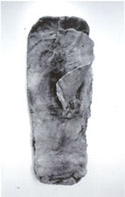 Murray Levick's reindeer-hide sleeping bag, used on Scott's 'Terra Nova' expedition © One of the small details that later appeared to have contributed to the demise of Scott's team was the use of leather washers for his expedition's fuel cans. On his return from the Pole, having learned that Amundsen had got there before him, Scott noted in his diary that when his men opened the cans some of the fuel had apparently evaporated. This was caused by the deterioration of the washers used to seal the cans in the extreme temperatures, allowing the fuel to 'creep'.
Amundsen knew of this 'creeping' in low temperatures, and one of his team devised bungs that hermetically sealed the cans, to prevent any loss of the life-giving fuel. By the time, later in their voyage, that Scott, Wilson and Bowers were confined to their tent, they had run out of fuel, which was of course needed for turning ice into water for drinking. Dehydration is as much a problem in Antarctica as starvation.
...enough dogs were killed to feed the hungry men and the rest of the dogs.
In terms of transportation, Scott always planned to man-haul using harnesses attached to sledges. This was exhausting work, but he believed it was more noble and less cruel than using animals. Amundsen had experienced man-hauling sledges in the Arctic and did not want to repeat this experience. He took well-trained dogs, bought specially in Greenland, and two expert dog-handlers, Sverre Hassel and Helmer Hanssen. The dog teams set the pace for the journey to the Pole and every detail was seen to, from making sure traces were comfortable to feeding the dogs properly. Dogs that weakened or became disobedient were killed or set free.
The dogs were also part of the Norwegian's meal plan and at Butcher's Camp, about half way to the Pole, enough dogs were killed to feed the hungry men and the rest of the dogs. Amundsen and his men were sickened by such butchery but they knew it was key to survival. The British party never ate their dogs but they did eat the ponies, burying some of the carcasses in the snow for their return journey.
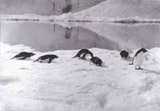 Penguins provided Amundsen's expedition with much-needed vitamins © Lack of good nutrition has been seen by some historians as being the main reason for the British party's eventual failure. Before setting off for the Pole, the British team probably already had nutritional deficiencies. Scurvy, caused by a lack of vitamin C, was an illness long known to sailors. This painful debilitating condition is always fatal if left untreated. Even though vitamins had not been identified in the 1910s, it was known that fresh food appeared to be the cure.
Amundsen and his men were eating fresh seal and penguin meat which, unknown to anyone at that time, contained enough vitamin C to prevent scurvy. The Norwegians, of course, had got this idea from indigenous peoples in the Arctic who ate an almost exclusively meat diet. The British palate preferred a less fishy taste and their penguin and seal meat was often overcooked, destroying the vitamin C.
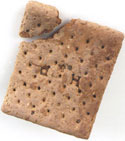 A biscuit found in Scott's tent © Another difference between the two teams was the flour used for 'sledging' biscuits, a staple part of any explorer's diet. The British biscuits were made with white flour and sodium bicarbonate. The Norwegian biscuits were made with oatmeal and yeast, which provided the essential B vitamins needed to keep the nervous system healthy. Pemmican, a cake made by mixing pounded dried beef with beef fat, was also eaten every day. Although it was nutritious and compact, it was unappetising. On sledging journeys, pemmican was mixed with melted snow to make a hot stew or 'hoosh'. Scott's pemmican lacked the oatmeal and peas of Amundsen's recipe, depriving his men of essential roughage.
Ultimately, the main difference between the Norwegian and British parties was leadership. Scott was a complex, sensitive and introspective man with considerable literary skills and charm. His concept of leadership was honed by his training as an English naval officer, which was inevitably hierarchical and formal. However, had his training been less conventional, he would not have been chosen by Sir Clements Markham (President of the Royal Geographical Society) nor the 'official' committee-men who appointed him.
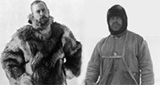 The competing expedition leaders, Amundsen and Scott, never met © Conversely, Amundsen was more of an innovative individualist - a professional explorer with a genuine passion for snow and ice. He was also complex, particularly in his tangled relationships, but his competitive focus and drive was unparalleled. They never met, despite Scott's attempt to make contact with Amundsen when he visited Christiania (modern-day Oslo) in 1910.
Scott's death, in the context of the mass-scale slaughter of World War One soon afterwards, put him beyond immediate criticism. Questioning his status as a 'hero' came later. By contrast, despite winning the race to the Pole, Amundsen had to live, embittered and insolvent, with anti-climax for the rest of his life - his victory at the South Pole very much eclipsed by the British tragedy.
Books
South: The race to the Pole by Pieter van der Merwe (Greenhill, 2000)
A First-rate Tragedy by Diana Preston (Mariner, 1999)
The South Pole by Roald Amundsen (C Hurst & Co, 2001)
Pinnacle of Antarctica by John E Rugg (1st Books, 2001)
Sian Flynn curated the 'South: the race to the Pole' exhibition (September 2000 to January 2002) at the National Maritime Museum, London, bringing together nearly 200 objects relating to Scott, Shackleton and Amundsen, as well as contributing to the accompanying book.



BBC © 2014The BBC is not responsible for the content of external sites. Read more.
This page is best viewed in an up-to-date web browser with style sheets (CSS) enabled. While you will be able to view the content of this page in your current browser, you will not be able to get the full visual experience. Please consider upgrading your browser software or enabling style sheets (CSS) if you are able to do so.

