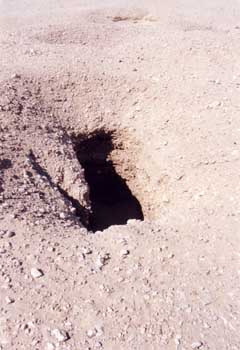
Prehistoric pit graves
At the dawn of the dynastic age, around the time of unification, Egypt's dead were buried in oval pit graves in desert cemeteries. Here the bodies underwent a natural mummification as the hot sands drained away the body fluids, averting the onset of decay. Already there was a belief in life after death, and the dead were provided with grave goods.
Eventually the elite started to protect the bodies of their dead with wooden and clay coffins, and sarcophagi (outer coffins). The pit graves were given wooden roofs and plaster or mud-brick linings and they became rectangular, sand-free tombs. Above ground a superstructure, perhaps a pile of stones or a low mound, marked the position of the grave. These flimsy superstructures have today vanished, although what lay below has sometimes remained.