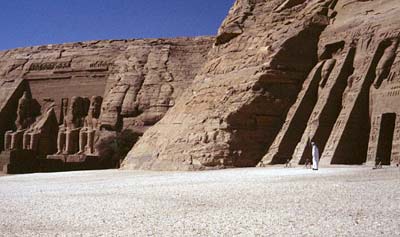
The temples at Abu Simbel, in southern Egypt (Nubia)
- 19th Dynasty
- After the upheavals of the late 18th Dynasty, the new royal house combined a return to traditional values with a number of innovations. Tradition is seen in the building of temples to the ancient gods and the repair of monuments damaged during the iconoclastic Akhenaten's reign, and also in an aggressive foreign policy. Under Ramesses II (1279-1212 BC), this culminated in the great battle against the Hittites at Qadesh in Syria. The long-term strategic stalemate that followed the battle, however, resulted in a peace treaty in 1258 that left the two powers the best of friends for the rest of the century.
Meanwhile, innovation was seen in the prominence granted to depictions of members of the royal family in public monuments, a practice that perhaps reached its peak at Abu Simbel, where the dominant figure in the smaller of the two temples seen here (on the right) was not the pharaoh, but Queen Nefertiry (not to be confused with the earlier Queen Nefertiti). However, the dynasty ended in chaos, with rebellion within the royal house, culminating in the end of the dynasty amid civil war.