Assyrian guardian figure
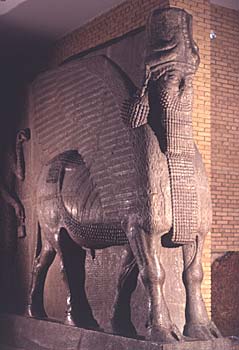
This colossal statue, 4.42m (14ft 6in) high and weighing some 30 tons, was one of a pair guarding a gate at Dur Sharrukin, founded by the Assyrian king Sargon II (721-705 BC). The city was abandoned by Sargon's son Sennacherib, who moved the capital to nearby Nineveh.
Similar, but smaller figures had been used in Assyrian palaces for almost two centuries. They combine divine authority (the horned head-dress) with human intelligence, an eagle's wings and the power of either a lion or, as here, a bull with five legs (two when seen from the front and four from the side, with a cuneiform inscription between them), symbolising the strength of the Assyrian empire that controlled the Near East for three centuries.
Bored guards have scratched a gaming board on the plinth. The game is a version of the 'Game of Twenty Squares', which was played at Ur in southern Iraq in about 2,600 BC, and is still played today.