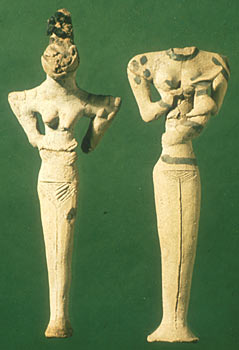
Prehistoric figurines
Figurines, mostly female, appear throughout the Near East from around 7,500 BC, and their distinctive styles enable archaeologists to identify various cultures or groups of people.
The two illustrated here come from Ur in southern Iraq, date to around 4,500 BC, and are typical of the prehistoric Ubaid culture. One figurine rests her hands on her abdomen, while the other (head missing) holds a baby who has an elongated head.
These, and others found at neighbouring sites, are known as 'lizard' figurines because of their reptilian appearance - which is due to their distinctive 'coffee-bean' eyes and elongated heads (possibly the result of binding in infancy). Bitumen is used to indicate the hair; painted or clay pellet marks on the shoulder may represent tattooing or scarification.
The preserved height of the figure on the right is 13.6cm.