Following the crowd
Whether it’s someone collapsing in front of us or a fight breaking out in the street, many of us have witnessed a stranger in distress. But plenty of people walk on by.
It’s not a modern phenomenon. In New York in 1964, 28-year-old Kitty Genovese was brutally murdered. It was reported that at least 30 neighbours witnessed the attack, but none of them intervened. Stepping into some situations would clearly be dangerous and ill-advised, but there are often other kinds of help that passers-by could provide.
Social psychologists have long tried to understand why people react the way they do. Several factors influence how we respond, contributing to the phenomenon known as the “bystander effect”.
The bystander effect
Brooke Kinsella, whose brother Ben was fatally stabbed in 2008, has been trying to understand how those kinds of tragedies can be prevented. We staged a demonstration in the street to show her the bystander effect.
Seeing a middle-aged man on the pavement, clutching his stomach and groaning, should signal to passers-by this is a ‘help’ situation. But research suggests that the larger the crowd, the more likely it is that people will ignore the situation. However, once one person stops, other people follow suit.
Brooke meets Dr Lasana T Harris, experimental psychologist from UCL, who has set up a demonstration to show how people in a crowd can be influenced by the so-called bystander effect.
The Bystander Effect
Brooke meets Dr Lasana T Harris, experimental psychologist from UCL, who has set up a demonstration to show howpeople in a crowd can be influenced by the so-called Bystander Effect.
Brooke Kinsella: Today I’m meeting a psychologist who’s studied some reasons why people don’t get involved, even when it’s obvious somebody may be in trouble.
Dr Lasana Harris: So what we have here is a demonstration we set up with an actor to illustrate the Bystander Effect, which is a scenario where if no one stops to help other people will fail to stop to help as well.
So he’s audibly moaning and these guys are going by, without even stopping and paying attention to it. The busier it is the less likely people are to stop as well.
Brooke Kinsella: That’s funny because if I was on my own I’d be more scared to stop. I think I’d probably feel safer if there was people around.
Lasana: Yeah - which is what you might think but it works the opposite way, right?
Brooke: Yeah – I can see that!
Lasana: But the minute one person jumps in and stops, other people are more likely to as well.
Brooke: Why is that?
Lasana: You get your information from other people. So there’s lots of social psychology that demonstrates we figure out information about the world based on what other people are doing. Now a lot of the people who do stop are people who have experience helping. So here we have a nun that stops and helps. We also have a city worker who’re used to seeing people that need help… and surprisingly lots of people with kids who stop to help. It’s the middle of the day, it’s a busy area, they don’t feel threatened.
But it’s interesting because you have some people who don’t stop at all, they don’t even pay any attention, they don’t even look… And you have others who look who probably decide it’s not okay to stop.
Brooke: I was quite shocked just how many people walked on by and didn’t help; and I always thought the main reason would be fear, which I completely understand. In the case of my brother there were many people there that night who didn’t help because they were scared.
But I learnt today that mainly it’s because a) we’re not aware of the situation and b) we expect other people to help. I think now that I’m aware of the Bystander Effect and if other people become aware of the Bystander Effect then you can fight against that instinct to just walk on by.
INTERACTIVE: Why do we behave like this?
Psychologists have discovered several key factors that can affect the decisions made by passers-by.
Factors like the weather, the location, the types of people passing and how the person in trouble is dressed can affect the situation. These variables continue to be researched and analysed by psychologists. For example, a 2008 study found that, if bystanders were friends, increasing their numbers resulted in a greater likelihood of them intervening in a scene of street violence.
Click or tap on the labels below to find out more.
Learn more about World War Two and the Holocaust
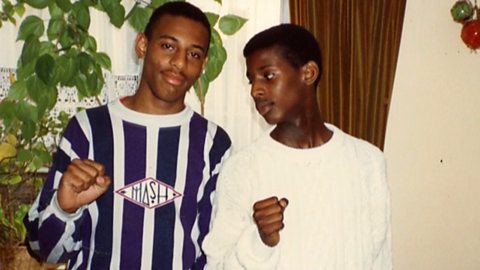
Stephen Lawrence: The murder that changed a nation. collection
Three short films from a BBC documentary examining the murder of Stephen Lawrence. Exploring identity, diversity, institutional racism and justice.
Is this sexual harassment? collection
A specially adapted BBC Three drama exploring an accusation of sexual harassment and an employment tribunal hearing.

Crossing Divides. collection
The BBC’s Crossing Divides project looks at the similarities and differences between people from a range of backgrounds.